KAPDEC® | Elite STEM Learning Platform | https://kapdec.com
Unit: Geometry
Chapter: Polygons & Graphing
Reference: – Introduction to Polygons, Sides, Vertices & Diagonals, Interior & Exterior Angles, Regular & Irregular Polygons, Convex & Concave Polygons, Introduction to Graphing (Bar Graphs & Line Graphs), Plotting Points, Interpreting Graphs
After studying this chapter, you should be able to understand:
- Introduction to Polygons & Their Components
- Sides, Vertices and Diagonals
- Interior and Exterior Angles of a Polygon
- Regular and Irregular Polygons
- Convex and Concave Polygons
- Introduction to Graphing: Bar Graphs and Line Graphs
- Plotting and Interpreting Simple Graphs
Elementary Geometry: Three Dimension Shapes:
Faces, Edges and Vertices
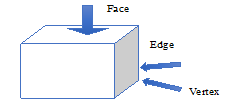
Let’s understand this with the help of cube.
Source: Kapdec.com
The side of cube is flat surface. This is called face.
Edge is the line segment where two faces meet.
The point where three edges of meet and is called vertex.
Cuboid
Source: Kapdec.com
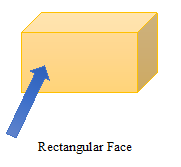
The cuboid has 6 rectangular faces.
The opposite rectangular plane surfaces are identical (equal in all respects).
It has 8 vertices and 12 edges.
In a cuboid there are 6 rectangular plane surfaces.
Cube
Source: Kapdec.com
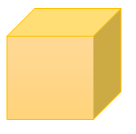
A cube is also a cuboid having all its 6 faces equal and square.
Thus, a cube has all the six faces identical, whereas a cuboid has the opposite faces identical.
Prism:
Source: Kapdec.com
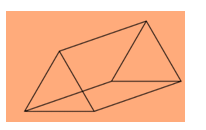
A prism has two identical triangles which are parallel to each other and three rectangles which are lateral to each other.
There are 5 faces, 9 edges and 6 vertices in a triangular prism.
Pyramid
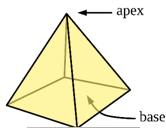
Source: Kapdec.com
The shape with a single base and other faces are triangles.
There are 5 faces, 8 edges and 5 vertices in a square base pyramid
Sphere
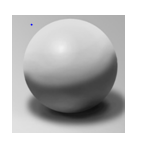
Source: Kapdec.com
The ball-like shape is called a sphere.
In sphere there is curve surface, no edge and no vertex.
