KAPDEC® | Elite STEM Learning Platform | https://kapdec.com
Source: Kapdec.com
Unit: Linear Functions
Graphing of Linear Functions, Rate of Change, Growth and Decay
Linear functions are a specific type of function that create straight lines when graphed. They are fundamental in algebra and widely used to model relationships between variables.
Definition and General Form
A linear function is a function that can be written in the form: f(x)=mx+b where:
- f(x) or y is the output or dependent variable.
- x is the input or independent variable.
- m is the slope of the line.
- b is the y-intercept, the point where the line crosses the y-axis.
Characteristics of Linear Functions
- Constant Rate of Change:
- The slope m represents the constant rate of change of the function.
- For every unit increase in x, y increases by m.
- Straight Line Graph:
- The graph of a linear function is always a straight line.
- Intercepts:
- Y-Intercept: The value of y when x=0, given by b.
- X-Intercept: The value of x when y=0, found by solving mx+b=0.
- Domain and Range:
- The domain of a linear function is all real numbers, (−∞,∞).
- The range of a linear function is all real numbers, (−∞,∞).
Slope and Y-Intercept
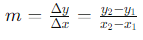
- Slope (m):
- Describes the steepness and direction of the line.
- Calculated as:
Source: Kapdec.com
-
- Positive slope: line rises from left to right.
- Negative slope: line falls from left to right.
- Zero slope: horizontal line.
- Undefined slope: vertical line.
- Y-Intercept (b):
- The point where the line crosses the y-axis.
- Found by setting x=0 in the equation f(x)=mx+b.
Example
For the linear function f(x)=3x+2:
- Slope (m): 3
- Y-Intercept (b): 2
Graphing Linear Functions
To graph a linear function, follow these steps:
- Identify the Slope and Y-Intercept:
- From the equation f(x)=mx+b.
- Plot the Y-Intercept:
- Locate the point (0,b) on the graph.
- Use the Slope to Find Another Point:
- From the y-intercept, use the slope 𝑚m (rise over run) to find another point.
- Example: For m=3, from (0,2), move up 3 units and right 1 unit to (1,5).
- Draw the Line:
- Connect the points with a straight line extending in both directions.
Example
Graph the function f(x)=−2x+4:
- Slope m=−2
- Y-Intercept b=4
- Plot the y-intercept (0,4).
- Use the slope to find another point: From (0,4), move down 2 units and right 1 unit to (1,2).
- Draw the line through (0,4) and (1,2).
Linear Function Applications
Linear functions are used in various real-life scenarios, including:
- Business and Economics:
- Cost Functions: Representing the total cost as a function of the number of units produced.
- Revenue Functions: Representing total revenue as a function of the number of units sold.
- Physics:
- Motion: Representing the relationship between distance and time for objects moving at constant speed.
- Everyday Situations:
- Budgeting: Modelling expenses over time.
- Conversion: Converting units, such as temperature or currency exchange rates.
Example
A taxi company charges a flat fee of $3 plus $2 per mile driven. The cost C of a trip that covers x miles can be modelled by the linear function: C(x)=2x+3
- Slope (m): $2 per mile.
- Y-Intercept (b): $3 (flat fee).
Summary
- Definition: Linear functions are written as f(x)=mx+b.
- Characteristics: Constant rate of change, straight-line graph, intercepts, and an infinite domain and range.
- Slope and Y-Intercept: The slope measures steepness and direction, while the y-intercept indicates where the line crosses the y-axis.
- Graphing: Identify slope and y-intercept, plot points, and draw the line.
- Applications: Used in business, physics, and daily life to model linear relationships.
Understanding linear functions is crucial for solving problems and modelling relationships in various disciplines.
Scan to visit this resource online
https://kapdec.com/resources/graphing-of-linear-functions-rate-of-change-growth-and-decay
