KAPDEC® | Elite STEM Learning Platform | https://kapdec.com
Source: Kapdec.com
Unit: Polynomials
Factoring Polynomial & Finding Zeroes of Polynomials
Factoring a polynomial involves expressing it as a product of simpler polynomials. This process simplifies solving equations and finding the roots (zeroes) of the polynomial.
Common Methods of Factoring
- Factoring Out the Greatest Common Factor (GCF):
- Identify the largest common factor of all terms.
- Factor out the GCF.
- Example: 6𝑥3+9𝑥2=3𝑥2(2𝑥+3)
- Factoring by Grouping:
- Group terms with common factors.
- Factor out the GCF from each group.
- Example: 𝑥3+3𝑥2+2𝑥+6=𝑥2(𝑥+3)+2(𝑥+3)=(𝑥2+2)(𝑥+3)
- Factoring Trinomials:
- For a trinomial of the form ax2+bx+c:
- Find two numbers that multiply to 𝑎𝑐ac and add to 𝑏b.
- Split the middle term using these numbers and factor by grouping.
- Example: 𝑥2+5𝑥+6=(𝑥+2)(𝑥+3)
- For a trinomial of the form ax2+bx+c:
- Difference of Squares:
- For expressions of the form a2−b2:
- Use the identity 𝑎2−𝑏2=(𝑎−𝑏)(𝑎+𝑏)
- Example: 𝑥2−9=(𝑥−3)(𝑥+3)
- For expressions of the form a2−b2:
- Sum and Difference of Cubes:
- For expressions of the form 𝑎3+𝑏3 or 𝑎3−𝑏3
- Use the identities:
- a3+b3=(a+b)(a2−ab+b2)
- a3−b3=(a−b)(a2+ab+b2)
- Use the identities:
- Example: 𝑥3−8=(𝑥−2)(𝑥2+2𝑥+4)
- For expressions of the form 𝑎3+𝑏3 or 𝑎3−𝑏3
Finding Zeroes of Polynomials
The zeroes (or roots) of a polynomial are the values of 𝑥x that make the polynomial equal to zero.
Methods to Find Zeroes
- Factoring:
- Factor the polynomial and set each factor to zero.
- Solve for x.
- Example: For 𝑥2−5𝑥+6=0, factor to get (x−2)(x−3)=0, giving roots x=2 and x=3.
- Using the Quadratic Formula:
- For quadratics of the form ax2+bx+c=0, use:
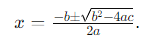
Source: Kapdec.com
-
- Example: For x2−4x+4=0,
-
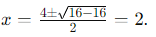
Source: Kapdec.com
- Synthetic Division:
- Use when one potential root is known or suspected.
- Simplify the polynomial and find other roots.
- Example: If x=1 is a root of 𝑥3−6𝑥2+11𝑥−6, synthetic division will help find remaining roots.
- Rational Root Theorem:
- Provides possible rational roots based on factors of the constant term and leading coefficient.
- Test each possible root.
- Example: For 2x3−3x2−8x+12=0, possible rational roots are ±1,±2,±3,±4,±6,±12.
- Graphical Method:
- Use graphing to identify where the polynomial crosses the x-axis.
- Approximate roots visually and refine using other methods.
Summary
- Factoring is a critical skill for simplifying polynomials and solving equations.
- Finding Zeroes involves several techniques, including factoring, using the quadratic formula, synthetic division, and the rational root theorem.
- Practice with these methods will improve your ability to handle various polynomial equations efficiently.
Scan to visit this resource online
https://kapdec.com/resources/factoring-polynomial-finding-zeroes-of-polynomials
