KAPDEC® | Elite STEM Learning Platform | https://kapdec.com
Unit : -RATIOS & RATES
Chapter: – Ratios & Relations
What students will learn in this Section
In this segment of the Ratios & Rates course, students delve into essential concepts. In the Chapter on Ratios and Relations, equips students with essential skills to analyze and interpret proportional relationships effectively. Students delve into the fundamental concepts of ratios, which are comparisons between two quantities, and rates, which are specific types of ratios that compare different units. By mastering these concepts, students learn to solve complex real-world problems involving proportional reasoning.
They explore various methods to simplify, compare, and manipulate ratios and rates, enhancing their ability to make accurate and meaningful comparisons between different data sets. Additionally, students develop the ability to identify and describe relationships between variables, a critical skill in data analysis. This comprehensive understanding of ratios and rates forms a crucial foundation for more advanced data analytics tasks, enabling students to interpret data accurately, draw insightful conclusions, and make data-driven decisions confidently.
Important Definitions:
- Ratio: A ratio is a comparison of two quantities expressed with a colon (a:b) or as a fraction (a/b). It shows how many times one value contains or is contained within the other.
- Rate: A rate is a specific type of ratio in which two quantities of different units are compared. An example is speed, which compares distance to time (miles per hour).
- Proportion: A proportion is an equation that states two ratios are equivalent. For example, if a/b = c/d, then a, b, c, and d are in proportion.
- Unit Rate: A unit rate is a rate in which the second quantity in the comparison is one unit. It simplifies a rate to show how much of one item exists per one unit of another item, such as 60 miles per hour (miles per one hour).
- Equivalent Ratios: Equivalent ratios are two or more ratios that express the same relationship between numbers. For example, 1:2 and 2:4 are equivalent ratios because they represent the same proportion.
- Scaling: Scaling involves multiplying or dividing both terms of a ratio by the same number to produce an equivalent ratio. This technique is used to find unknown quantities in proportional relationships.
- Cross-Multiplication: Cross-multiplication is a method used to solve proportions. By multiplying the numerator of one ratio by the denominator of the other ratio and setting the products equal, you can solve for an unknown variable.
- Dimensional Analysis: Dimensional analysis, also known as unit conversion, is a method used to convert one unit of measure to another using the multiplicative identity of ratios equal to one.
- Rate of Change: The rate of change is a measure of how one quantity changes in relation to another quantity. It is often used to describe the speed at which one variable changes over time or another variable.
Important Formulae:
- Ratio:
- The ratio of two quantities a and b is expressed as: Ratio=

Source: Kapdec.com
- The ratio of two quantities a and b is expressed as: Ratio=
- Proportion:
- If

Source: Kapdec.com
, then a, b, c, and d are in proportion.
- If
- Percentage:
- The percentage of a quantity x in relation to a whole y is calculated as: Percentage=

Source: Kapdec.com
×100%
- The percentage of a quantity x in relation to a whole y is calculated as: Percentage=
- Rate:
- The rate of change is given by: Rate=
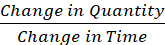
Source: Kapdec.com
- The rate of change is given by: Rate=
- Simple Interest:
- Simple Interest (I) is calculated using the formula: I=P⋅R⋅T, where P is the principal amount, R is the rate of interest, and T is the time (in years).
Speed Strategy
- Consistent Units:
- Always ensure that the units for distance and time are consistent. Convert if necessary for uniformity.
- Understand Proportional Relationships:
- Recognize situations where speed, distance, and time maintain proportional relationships. Understand that this can simplify problem-solving.
- Work with Percentages:
- Practice solving problems involving changes in speed represented as percentages. Understand how it affects travel time.
