KAPDEC® | Elite STEM Learning Platform | https://kapdec.com
Unit: Functions involves Parameters, Vectors & Matrices
Chapter: Modeling Change with Parametric Functions
Reference: – Parametric equations, Parametric curves, Tangent lines, Normal lines, Arc length, Curvature, Acceleration, Tangent Vectors, Normal Vectors, Binormal vectors, Unit Tangent, Planar curves, Polar coordinates, Applications & Properties
After studying this chapter, you should be able to:
- Introduction to Parametric & Vector-Valued Functions.
- Tangent, Normal & Binormal Vectors.
- Unit Tangent & Planar curves.
- Polar coordinates, Applications & Properties.
Introduction to Parametric Functions
- Parametric equations represent curves or objects in a plane by defining their coordinates as functions of an independent variable (usually denoted as t).
- The independent variable t is often interpreted as time, representing how the curve or object changes over time.
- Parametric equations typically consist of two or three equations that express the x, y (and sometimes z) coordinates of a point on the curve as functions of t.
- Parametric equations allow for more flexibility in describing complex curves or motion compared to traditional Cartesian equations.
- To graph a parametric curve, a table of values is often used to plot individual points by substituting different values of t into the equations.
- The derivative of a parametric equation represents the rate of change of the x and y coordinates for t, often interpreted as the velocity vector.
- The chain rule is used to find the derivatives of parametric equations by differentiating the x and y equations separately and then combining the results.
- Tangent lines to a parametric curve can be found by evaluating the derivative at a specific value of t and determining the slope.
- The slope of the tangent line at a given point on a parametric curve can be found using the derivative and represents the rate at which the curve is changing at that point.
- The arc length of a parametric curve can be calculated using integrals and a specific formula that takes into account the derivative of the parametric equations.
- Curvature is a measure of how sharply a curve is bending at a given point, and it can be determined using the derivatives of the parametric equations.
- Parametric equations can be used to model various real-world scenarios, such as projectile motion, the motion of objects in space, or the path of a moving particle.
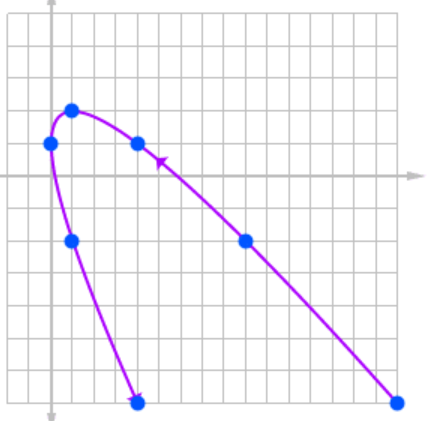
Source: Kapdec.com
(Parametric Functions)
Introduction to Vector-Valued Functions: –
- Vector-valued functions are functions that map a real number (usually denoted as t) to a vector in two or three-dimensional space.
- Vector-valued functions are often used to describe the motion of objects in space or the path of a particle.
- The components of a vector-valued function represent the coordinates of a point in space as functions of t.
- The derivative of a vector-valued function represents the rate of change of the position vector for t, often interpreted as the velocity vector.
- The derivative of a vector-valued function is found by differentiating each component of the function separately.
- The chain rule is used to find the derivatives of vector-valued functions by applying the derivative to each component and combining the results.
- The second derivative of a vector-valued function represents the rate of change of the velocity vector and is interpreted as the acceleration vector.
- Tangent vectors to a vector-valued function can be found by evaluating the derivative at a specific value of t, representing the direction of motion at that point.
- The magnitude of the derivative of a vector-valued function represents the speed or magnitude of the velocity vector.
- The arc length of a vector-valued function can be calculated using integrals and a specific formula that takes into account the derivative of the vector-valued function.
- Vector-valued functions can be used to model various real-world scenarios, such as the trajectory of a projectile, the motion of a particle, or the path of a moving object.
- Vector-valued functions are also essential in studying topics such as curves in space, motion in three dimensions, and the fundamental principles of calculus in higher dimensions.
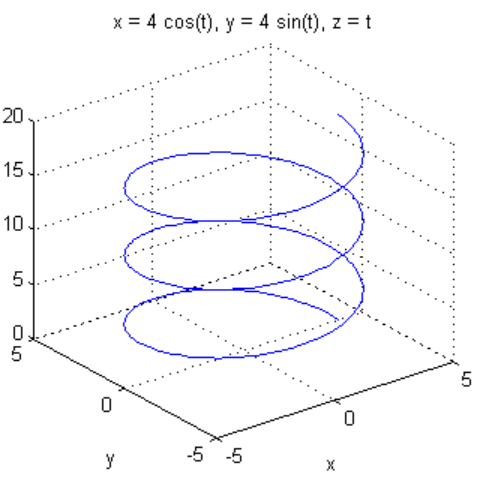
Source: Kapdec.com
(Vector–Valued Function)
Tangent, Normal & Binormal Vectors
- Tangent vectors represent the direction of motion or the instantaneous velocity of a curve or path at a specific point.
- Tangent vectors are typically found by taking the derivative of a parametric or vector-valued function and evaluating it at a given point.
- The tangent vector is parallel to the curve at the point of tangency and points in the direction of increasing t.
- Normal vectors are perpendicular to the tangent vectors and represent the direction of the curve bending or the instantaneous curvature at a specific point.
- Normal vectors can be obtained by taking the derivative of the tangent vector and normalizing it to have a magnitude of 1.
- The normal vector is always orthogonal to the tangent vector and lies in the plane that the curve lies on.
- The binormal vector is perpendicular to both the tangent vector and the normal vector and represents the “twisting” or “turning” of a curve in three-dimensional space.
- The binormal vector can be obtained by taking the cross product of the tangent vector and the normal vector.
- The binormal vector is always orthogonal to both the tangent vector and the normal vector, forming a three-dimensional orthogonal coordinate system known as the Frenet-Serret frame.
- The Frenet-Serret formulas relate the derivatives of the tangent, normal, and binormal vectors to the curvature and torsion of a curve.
- The curvature of a curve measures how sharply it bends at a given point and can be calculated using the derivatives of the tangent vector.
- The torsion of a curve measures how much it twists in space and can be calculated using the derivatives of the tangent, normal, and binormal vectors.
Unit Tangent & Planar curves
- The unit tangent vector is a vector of length 1 that represents the direction of motion or the direction of the curve at a specific point.
- The unit tangent vector is obtained by normalizing the tangent vector and dividing it by its magnitude.
- The unit tangent vector is always parallel to the tangent vector but has a magnitude of 1, providing only the direction information.
- The unit tangent vector is useful in studying the behavior of curves without being influenced by the speed or magnitude of the motion.
- Planar curves are curves that lie entirely in a single plane in three-dimensional space.
- Planar curves can be described by parametric equations or vector-valued functions that have x and y coordinates but no z coordinate.
- The unit tangent vector is also useful in analyzing planar curves as it represents the direction of motion on the plane.
- The curvature of a planar curve measures how sharply it bends at a given point and can be calculated using the derivatives of the unit tangent vector.
- The curvature of a planar curve is related to the rate of change of the unit tangent vector for arc length.
- The unit normal vector is a vector that is orthogonal to the tangent vector and lies in the plane of the curve.
- The unit normal vector can be obtained by normalizing the derivative of the unit tangent vector or by taking the derivative of the tangent vector and normalizing it.
- The unit normal vector provides information about the direction of the curve’s curvature or the direction the curve is turning in the plane.
Polar Co-ordinates & Applicative Properties
- Polar coordinates are an alternative coordinate system to Cartesian coordinates, representing points in a plane using a distance from the origin (r) and an angle from the positive x-axis (θ).
- The radial distance (r) in polar coordinates represents the length from the origin to a point, and it can be either positive or negative.
- The angle (θ) in polar coordinates represents the counterclockwise rotation from the positive x-axis to the line connecting the origin and the point.
- Converting between Cartesian coordinates (x, y) and polar coordinates (r, θ) involves using trigonometric functions such as sine and cosine.
- Polar equations are equations that relate the distance (r) and angle (θ) in polar coordinates. They can describe curves, shapes, or regions in a plane.
- Polar curves can have different symmetries and can take the form of lines, circles, spirals, or more complex shapes.
- Derivatives of polar equations can be found by using the chain rule and trigonometric identities.
- The area of a region bounded by a polar curve can be determined using integration and a specific formula that takes into account the angle and radius.
- Polar coordinates are particularly useful in analyzing and describing curves with rotational symmetry or radial growth patterns.
- Applications of polar coordinates in calculus include studying the motion of objects following circular paths, analyzing periodic phenomena, and solving problems involving polar symmetry.
- Polar coordinates can be used to model and analyze phenomena such as planetary orbits, pendulum motion, or the behavior of waves.
- Understanding polar coordinates and their applications is important in various branches of science and engineering, such as physics, astronomy, and engineering design.
Example: – Find the derivative of the parametric equations x = 2t2 and y = t – 1.
Solution:
To find the derivative, we differentiate each equation for t:
dx/dt = d(2t2)/dt = 4t,
dy/dt = d(t – 1)/dt = 1.
Therefore, the derivative of the parametric equations is given by the vector-valued function:
r'(t) = 4t i + j.
Example: – Consider the vector-valued function r(t) = (2t, t2, 3t – 1). Find the derivative of r(t).
Solution:
To find the derivative, we differentiate each component of the vector-valued function for t:
dr/dt = (d(2t)/dt, d(t2)/dt, d(3t – 1)/dt)
= (2, 2t, 3).
Therefore, the derivative of the vector-valued function is given by the vector-valued function:
r'(t) = (2, 2t, 3).
Key Points
- Parametric functions represent curves or objects in a plane by defining their coordinates as functions of an independent variable (usually denoted as t).
- Vector-valued functions are functions that map a real number (usually denoted as t) to a vector in two or three-dimensional space.
- The derivative of a parametric or vector-valued function represents the rate of change of the position vector for the independent variable (t).
- To find the derivative of a parametric function, you differentiate each component of the function for t.
- The chain rule is used when differentiating parametric or vector-valued functions. It involves differentiating each component and then combining the results.
- The derivative of a parametric or vector-valued function is itself a vector-valued function.
- The derivative of a parametric or vector-valued function gives the velocity vector, which represents the instantaneous rate of change and the direction of motion.
- The second derivative of a parametric or vector-valued function represents the rate of change of the velocity vector and is interpreted as the acceleration vector.
- Tangent vectors to a parametric or vector-valued function can be found by evaluating the derivative at a specific value of t, representing the direction of motion at that point.
- The magnitude of the derivative of a parametric or vector-valued function represents the speed or magnitude of the velocity vector.
- The derivative of a vector-valued function can be interpreted as the velocity vector, which provides information about the rate and direction of motion.
- The derivative of a vector-valued function can be used to find tangent lines, tangent planes, or instantaneous rates of change in applications.
- The derivative of a parametric or vector-valued function can be used to determine the curvature of a curve at a given point.
- The derivative of a parametric or vector-valued function can be used to find the arc length of a curve or the length of a displacement vector.
- Understanding the derivatives of parametric and vector-valued functions is crucial for studying motion, curve analysis, and solving real-world problems involving time-varying quantities.
Scan to visit this resource online
https://kapdec.com/resources/modeling-change-with-parametric-functions
