KAPDEC® | Elite STEM Learning Platform | https://kapdec.com
Unit: Differentiation-Fundamental Properties
Chapter: Continuity & Differentiability
Reference: – Continuous, Discontinuous, Point of Discontinuity, Removable Discontinuity, jump discontinuity, Tangent line, Differentiation, Derivatives, Cusp, Critical point, Piecewise function, Continuity implication, Types of continuity & Differentiability, Mixed properties, Rules & Formation.
After studying this chapter, you should be able to:
- Fundamental Properties of Continuous Function.
- Continuities on closed Interval & Discontinuities
- Rules of Differentiability & Its Implications
- Rules & Formation in Differentiability
Fundamental Properties of Continuous Function
- The sum, difference, and product of continuous functions:
- If f(x) and g(x) are continuous functions at a point c, then their sum, difference, and product, denoted by (f + g)(x), (f – g)(x), and (f * g)(x) respectively, are also continuous at point c.
- This property holds for any combination of continuous functions, allowing you to perform arithmetic operations on continuous functions without losing continuity.
- Composition of continuous functions:
- If f(x) is a continuous function at a point c, and g(x) is a continuous function at f(c), then the composite function (g ◦ f)(x) = g(f(x)) is also continuous at point c.
- In other words, the composition of two continuous functions is itself continuous.
- Continuity of elementary functions:
- Many elementary functions such as polynomials, rational functions, trigonometric functions (sin(x), cos(x), etc.), exponential functions (ex), and logarithmic functions (ln(x)) are continuous on their respective domains.
- This means that these functions are continuous for all values within their specified ranges.
- Continuity on closed intervals and compact sets:
- A function defined on a closed interval [a, b] or a compact set is continuous on that interval or set if it is continuous at every point within that interval or set.
- This property is useful when dealing with functions defined on specific intervals or compact sets, allowing you to determine the continuity of the function based on its behavior within that range.
- Intermediate Value Theorem:
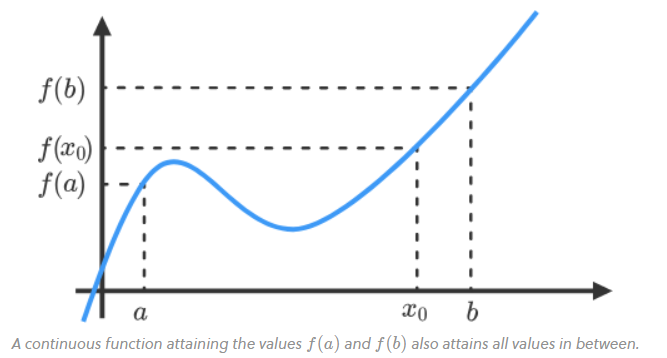
- If a function f(x) is continuous on the closed interval [a, b] and takes on two values f(a) and f(b) with intermediate value L, then there exists at least one value c in the interval (a, b) such that f(c) = L.
- This theorem guarantees the existence of a value within a continuous function that lies between any two given values in its range.
- Extreme Value Theorem:
- If a function f(x) is continuous on a closed interval [a, b], then it attains its maximum and minimum values on that interval.
- This theorem ensures that a continuous function defined on a closed interval has both a maximum and minimum value within that interval.
- Discontinuities:
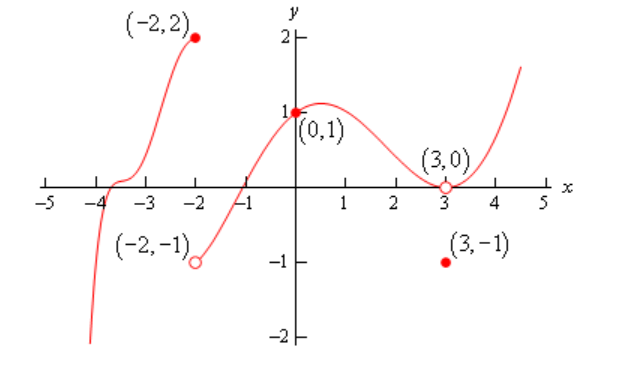
- Discontinuities are points where a function fails to be continuous.
- Different types of discontinuities include removable discontinuities (where the function has a hole but can be made continuous by defining the value at that point), and jump discontinuities (where the function “jumps” from one value to another at the point).
Source: Kapdec.com
(Continuous function)
Continuities in closed Intervals & Discontinuities
- Interior points:
- A function f(x) is said to be continuous at an interior point c of the interval [a, b] if the limit of f(x) as x approaches c exists and is equal to f(c). In other words, there are no abrupt jumps or holes in the function at that point.
- This concept of continuity at interior points is similar to the general definition of continuity for real-valued functions, where the function behaves smoothly without any sudden changes.
- Boundary points:
- For continuity at the endpoints of the closed interval, namely a and b, there are two different cases to consider:
- Right continuity: The function f(x) is said to be right continuous at a (denoted as f(a+)) if the limit of f(x) as x approaches a from the right side exists and is equal to f(a).
- Left continuity: The function f(x) is said to be left continuous at b (denoted as f(b-)) if the limit of f(x) as x approaches b from the left side exists and is equal to f(b).
- Continuity over the entire closed interval:
- To determine the continuity of a function over the entire closed interval [a, b], it must be continuous at all interior points of the interval and either right continuous at a or left continuous at b, or both.
- If a function satisfies these conditions, it is considered continuous on the closed interval [a, b].
- Importance of continuity on closed intervals:
- Continuity on a closed interval is a crucial property because it guarantees that the function behaves in a predictable and well-behaved manner throughout the interval.
Rules of Differentiability & its Implications: –
- Chain Rule:
- The chain rule allows us to differentiate composite functions. If y = f(g(x)), where f(u) and g(x) are both differentiable functions, then the derivative of y concerning x is given by dydx

Source: Kapdec.com
= dfdu

Source: Kapdec.com
*dgdx

Source: Kapdec.com
.
- Implication: The chain rule is crucial for finding the derivative of functions that are composed of multiple nested functions. It enables us to break down complex functions into simpler ones and differentiate them step by step.
- Implication for Rate of Change:
- The derivative of a function represents the rate of change of that function concerning its independent variable. It gives the slope of the tangent line to the graph of the function at any given point.
- Implication: By calculating the derivative of a function, we can determine how the function is changing at different points. Positive derivatives indicate increasing values, negative derivatives indicate decreasing values and zero derivatives indicate points of extrema or points of inflection.
- Differentiability Implies Continuity:
- If a function is differentiable at a point, it implies that the function is continuous at that point.
- Implication: This property allows us to determine the continuity of a function based on its differentiability. If a function is differentiable, we can conclude that it has no abrupt jumps or discontinuities at that point.
These points highlight the importance and implications of the rule of differentiability in calculus. The chain rule allows us to differentiate composite functions, the derivative represents the rate of change, and differentiability implies continuity.
Source: Kapdec.com
(Differentiation Function)
Implicit Differentiability: –
Implicit differentiation is a technique used when the equation of a function is given implicitly rather than explicitly. It allows us to find the derivative of an implicitly defined function for a particular variable. Here’s a brief overview of implicit differentiation:
- Implicit Functions: An implicit function is a function in which the dependent variable and the independent variable are not explicitly isolated. Instead, they are related through an equation. For example, the equation of a circle represents a relationship between x and y.
- Procedure: To perform implicit differentiation, we differentiate both sides of the equation concerning the variable of interest. Treat y as a function of x and use the chain rule whenever necessary. This process allows us to finddydx

Source: Kapdec.com
, the derivative of y for x.
- Applications: Implicit differentiation is useful in cases where it’s difficult or impossible to explicitly solve for one variable in terms of the other. It finds applications in various areas, including physics (e.g., implicit equations in mechanics), economics (e.g., demand and supply relationships), and geometry (e.g., finding slopes of curves defined implicitly).
Source: Kapdec.com
Example 1: – Check the continuity of the function f given by f(x) = 2x + 3 at x = 1.
Solution: f(x) = 2x + 3
f(1) = 2 + 3 = 5, so f(1) exists.
Now,
l

Source: Kapdec.com
= 2(1) + 3 = 5
Hence, f is continuous at x = 1.
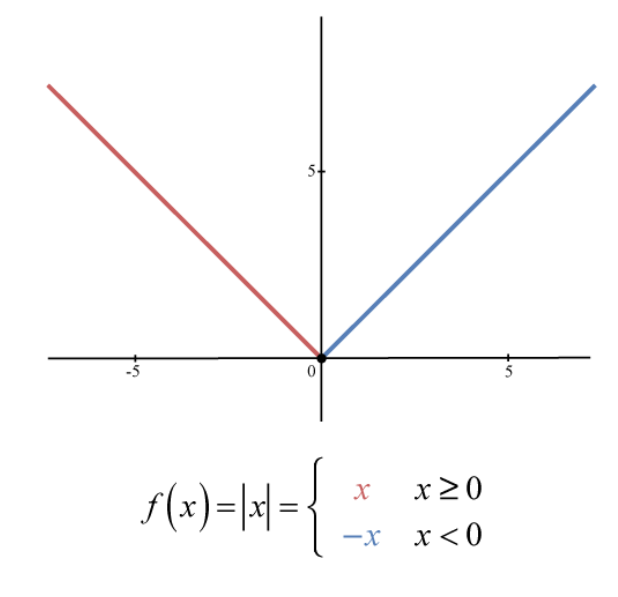
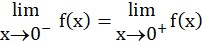
Example 2: – Discuss the continuity of the function f given by f(x) = |x| at x = 0.
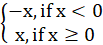
Solution: By definition
f(x) =
Source: Kapdec.com
f (0) = 0
Left-hand limit of f at 0 is
l

Source: Kapdec.com
Right-hand limit of f at 0 is
l

Source: Kapdec.com
Source: Kapdec.com
= f(0)
Hence, f is continuous at x = 0.
Key Points
- Continuity is a fundamental property that ensures a function is smooth and has no abrupt jumps or holes.
- Continuous functions satisfy the properties of algebraic operations such as addition, subtraction, and multiplication.
- Composite functions of continuous functions are also continuous.
- Elementary functions like polynomials, rational functions, trigonometric functions, exponential functions, and logarithmic functions are continuous within their domains.
- The Intermediate Value Theorem guarantees the existence of a value between two points if the function is continuous on the interval.
- The Extreme Value Theorem states that a continuous function on a closed interval attains its maximum and minimum values.
- Differentiability is a property that indicates the smoothness of a function and the existence of its derivative.
- The derivative of a constant function is zero, indicating that the rate of change is constant.
- The power rule allows us to differentiate functions involving powers of x by multiplying the term by the power and decreasing the power by 1.
- The chain rule allows us to differentiate composite functions, breaking them down into simpler components and applying the derivative rule sequentially.
These key points provide a concise overview of the fundamental properties of continuity and differentiability, highlighting their importance in analyzing and understanding functions in calculus.
