KAPDEC® | Elite STEM Learning Platform | https://kapdec.com
Source: Kapdec.com
Unit: Zeros, Parabolas, And Polynomial Graphing
Solving Functions, Graphing and Transformations
Understanding how to solve functions, graph them, and apply transformations is essential for mastering algebra and calculus. This involves finding solutions to equations, representing functions visually, and manipulating graphs to understand their behaviour better.
Solving Functions
Solving functions typically involves finding the values of the variable(s) that satisfy the given equation.
- Linear Functions:
- Form: f(x)=mx+b
- Solution: Find x when f(x)=k (a constant).
- Example: Solve 3x+2=11:
3x+2=11⟹3x=9⟹x=3
- Quadratic Functions:
- Form: f(x)=ax2+bx+c
- Solutions: Use factoring, completing the square, or the quadratic formula:
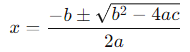
Source: Kapdec.com
-
- Example: Solve 𝑥2−5𝑥+6=0:
(x−2)(x−3)=0⟹x=2 or x=3
- Rational Functions:
- Form: f(x)=

Source: Kapdec.com
- Solution: Set the numerator equal to zero and solve for x while considering the domain restrictions.
- Example: Solve

Source: Kapdec.com
=0
- Form: f(x)=
2x=0⟹x=0(Domain: x ≠1)
- Radical Functions:
- Form: f(x)=

Source: Kapdec.com
- Solution: Isolate the radical and then square both sides, ensuring to check for extraneous solutions.
- Example: Solve

Source: Kapdec.com
=4
- Form: f(x)=
x+3=16⟹x=13
Graphing Functions
Graphing functions involves plotting points and understanding the overall shape and behaviour of the function.
- Linear Functions:
- Graph: A straight line.
- Slope-Intercept Form: y=mx + b, where m is the slope and b is the y-intercept.
- Example: y=2x+1 passes through (0, 1) with a slope of 2.
- Quadratic Functions:
- Graph: A parabola.
- Vertex Form: 𝑦=𝑎(𝑥−ℎ)2+𝑘, where (h, k) is the vertex.
- Example: 𝑦=(𝑥−2)2−3 is a parabola with vertex (2, -3).
- Rational Functions:
- Graph: Hyperbolas or other curves with asymptotes.
- Example: y=

Source: Kapdec.com
has vertical asymptote x=0 and horizontal asymptote y=0.
- Radical Functions:
- Graph: Starts at the point where the radicand is zero and typically increases.
- Example: y=

Source: Kapdec.com
starts at (1, 0).
Transformations of Functions
Transformations alter the position or shape of the graph of a function. Common transformations include translations, reflections, stretches, and compressions.
- Translations:
- Vertical: y=f(x)+c shifts the graph up (if c>0) or down (if c<0).
- Horizontal: y=f(x−h) shifts the graph right (if h>0) or left (if h<0).
- Example: y=

Source: Kapdec.com
+2 is a vertical shift up by 2 units.
- Reflections:
- Across the x-axis: y=−f(x).
- Across the y-axis: y=f(−x).
- Example: y=−

Source: Kapdec.com
+reflects y=

Source: Kapdec.com
across the x-axis.
- Stretches and Compressions:
- Vertical Stretch/Compression: y=a⋅f(x) stretches if ∣a∣>1 and compresses if ∣a∣<1.
- Horizontal Stretch/Compression: y=f(bx) compresses horizontally if ∣b∣>1 and stretches if ∣b∣<1.
- Example: y=2

Source: Kapdec.com
is a vertical stretch by a factor of 2.
Summary
- Solving Functions: Techniques vary by type of function (linear, quadratic, rational, radical).
- Graphing Functions: Visual representation helps understand the behaviour and key features.
- Transformations: Includes translations, reflections, stretches, and compressions, which modify the graph’s position and shape.
Mastering these concepts allows for a deeper understanding of algebraic functions and prepares for more advanced studies in calculus and beyond.
Scan to visit this resource online
https://kapdec.com/resources/solving-functions-graphing-and-transformations
