KAPDEC® | Elite STEM Learning Platform | https://kapdec.com
Unit – Chemistry of life
Chapter- Elements of life
Reference: Elements of life, Carbon, Hydrogen Oxygen Nitrogen Phosphorus, Sulphur, Functional groups
Learning objectives
- To understand the composition of macromolecules required by living organisms
Elements of life
99% percent of the mass of the human body is made up of CHNOPS (hydrogen, oxygen, nitrogen, carbon, phosphorus, and sulfur). In plants, carbon, hydrogen, and oxygen (macromolecules) are mostly received from CO₂ and H₂O. Carbon makes up 17.5%, oxygen makes up 25.6%, nitrogen makes up 2.4%, and hydrogen 10.2%.
Carbon
- Carbon atoms have the unique ability of catenation where it can make large number of compounds
- Biological molecules such as carbohydrates, proteins, lipids, and nucleic acids are composed of carbon molecules.
- It has tetravalency so it can react with other elements
Hydrogen
- Hydrogen helps in formation of C-H stable bonds.
- All macromolecules are made of hydrogen like carbohydrates, proteins etc.
- Hydrogen aids in the production of energy in the human body. As we all know, ATP (Adenosine triphosphate) is the main source of energy for most cellular processes.
Oxygen
- Oxygen is essential for life. It helps us to get energy by aerobic respiration.
- Most of biochemical and metabolic activities require oxygen.
Nitrogen
- Nitrogen is a building block in proteins, nucleic acids, amino acids, and enzymes.
- Nitrogen is a key element in the nitrogen cycle, which plays a crucial role in the balance of nutrients in ecosystems
- Nitrogen is even a component of many hormones, such as adrenaline and insulin
Phosphorus
- Phosphorus is a key component of nucleic acids, certain proteins, and lipids.
- It is also involved in various biological processes and helps in nutrient cycling.
Sulphur
- Sulphur is essential to all living things. It is taken up as sulphate from the soil (or seawater) by plants and algae.
- It is used to make two of the essential amino acids needed to make proteins.
- It is also needed in some co-enzymes.
Functional groups -A functional group is defined as an atom or group of atoms within a molecule that has similar chemical properties whenever it appears in various compounds.
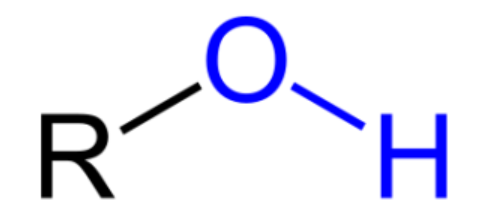
- Hydroxyl Group: Hydrogen bonded to Oxygen (OH) attached to the carbon skeleton. (alcohols such as methanol, polar)
Source: Kapdec.com
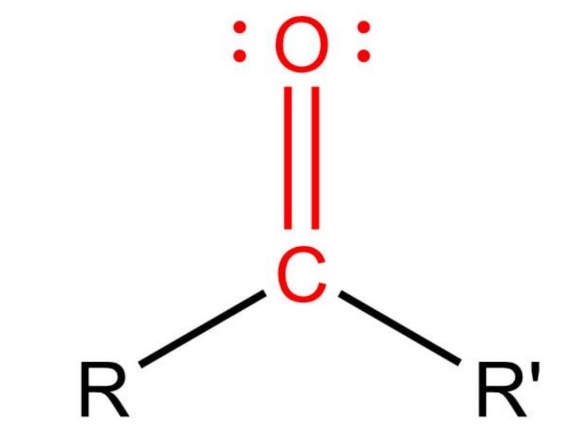
- Carbonyl Group: Double bond (sharing of two pairs of valence electrons) between carbon and oxygen. If the carbonyl group is on the end of the carbon skeleton, it is called an aldehyde. If not, then it is a ketone. (polar)
Source: Kapdec.com
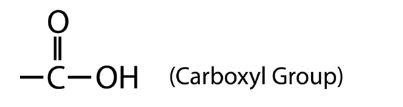
- Carboxyl Group: a combination of carbonyl and hydroxyl where carbon is double-bonded to an oxygen and a hydroxyl. (release H+ into solutions, acidic)
Source: Kapdec.com
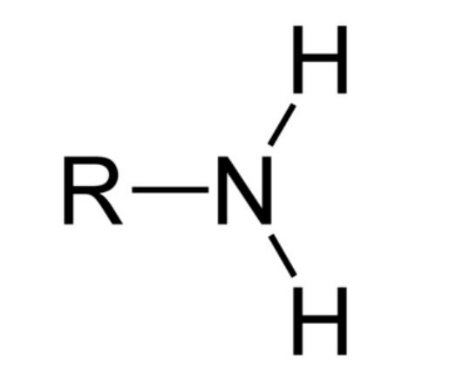
- Amino Group: Nitrogen bonded to two hydrogens and one carbon atom. Amines are organic molecules that have an amino group. (remove H+ from solutions; therefore, basic) Nitrogen is used to build proteins and nucleic acids
Source: Kapdec.com
- Phosphate Group: phosphate ion covalently attached to the carbon skeleton. (Lots of energy is used to make nucleic acids and phospholipids; acidic because they release H+ into solutions)
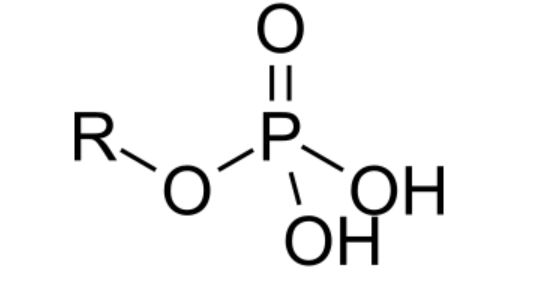
Source: Kapdec.com
- Sulfhydryl Group: Sulfur bonded to a hydrogen atom. (Polar)
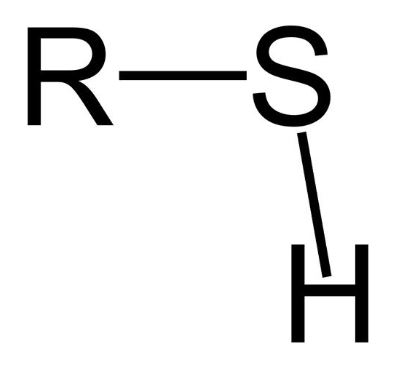
Source: Kapdec.com
Solved examples
Example 1. This element makes up about 63% of the mass of animals and 75% of the mass of plants—
- nitrogen
b) carbon
c)oxygen
d)hydrogen
Solution 1: c (oxygen)
Example 2. What biomolecules contain nitrogen?
a) Proteins and Nucleic acids
b) Carbohydrates and Lipids
c)Nucleic acids and Carbohydrates
d)Lipids and Proteins
Solution 2: a (Proteins and nucleic acids)
Summary
- The key elements of life are C, H, O, P, N, S which are total 6 in number.
- Carbon atoms have the unique ability of catenation where it can make large number of compounds
- Hydrogen helps in formation of C-H stable bonds.
- Nitrogen is a building block in proteins, nucleic acids, amino acids, and enzymes.
- Oxygen is essential for life. It helps us to get energy by aerobic respiration.
- Phosphorus is a key component of nucleic acids, certain proteins, and lipids.
- Sulphur is essential to all living things. It is taken up as sulphate from the soil (or seawater) by plants and algae.
- Functional groups include amino, phosphate, hydroxyl, carbonyl, carboxyl, and sulfhydryl groups.
