KAPDEC® | Elite STEM Learning Platform | https://kapdec.com
Unit: Number System
Chapter: Introduction & Comparing Fractions
Reference: – Introduction to Fractions, Numerator and Denominator, Fraction as Part of a Whole, Proper, Improper and Mixed Fractions, Like and Unlike Fractions, Equivalent Fractions, Comparing Fractions (Like Fractions, Unlike Fractions, Same Numerator), Cross Multiplication Method
After studying this chapter, you should be able to understand:
- Introduction to Fractions & Their Meaning
- Numerator and Denominator
- Fraction as Part of a Whole
- Proper, Improper and Mixed Fractions
- Like and Unlike Fractions
- Equivalent Fractions
- Comparing Fractions with Same Denominator
- Comparing Fractions with Same Numerator
- Comparing Unlike Fractions (LCM and Cross Multiplication Methods)
Fractions
Source: Kapdec.com
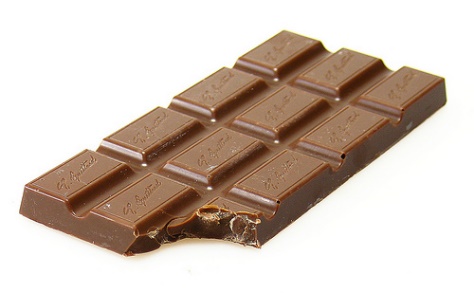
John had a chocolate which had 12 pieces. He ate 1 piece. How much of the chocolate is left with John?
We can see, the chocolate is divided into 12 parts of which 1 part was eaten by John. So, 11 out of 12 parts is left with him. We can denote this as 1112

Source: Kapdec.com
which denotes a fraction.
But what is a fraction?
A fraction is a part of a whole i.e. if something is broken into parts, a fraction shows how many parts we are left with or taking into consideration out of all those parts.
A fraction has two components i.e. the numerator and the denominator.

Source: Kapdec.com
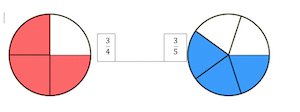
Let us look at the shaded portion in the following figures-
Source: Kapdec.com
Here 3/4 and 3/5 both are fractions. The colored portion represents the part of a whole expressed as a fraction.
Fractions are used in daily life to denote many things like
- Half of an apple = ½
- Quarter of a chocolate bar = ¼
- 4 of a dozen eggs

Source: Kapdec.com
Types of Fractions
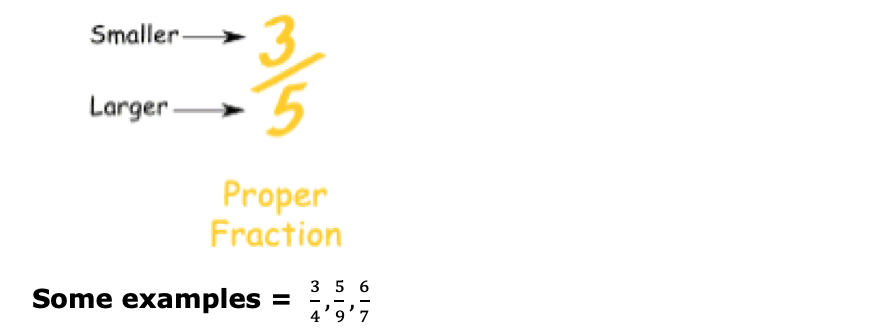
Proper Fractions-In a fraction, if the numerator is less than its denominator, it is called proper fraction.
Source: Kapdec.com
In the above given examples, 3 < 4, 5 < 9, 6 < 7. So, they are proper fractions.
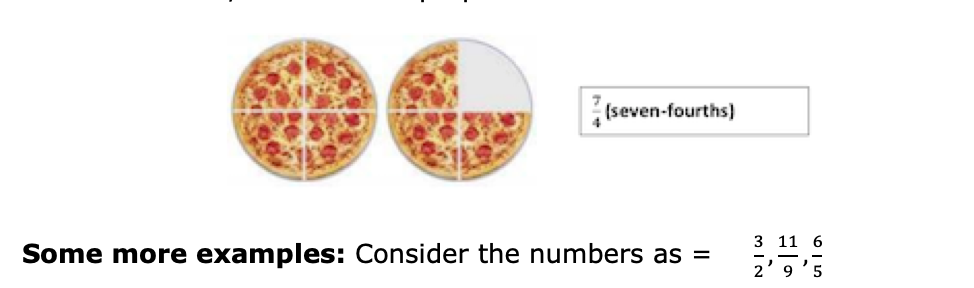
Improper Fractions- In a fraction, if the numerator is greater than its denominator, it is called improper fraction.
Source: Kapdec.com
In the above given examples, 3 >2, 11> 9, 6 >5. So, they are improper fractions.
As we can see from the above set of examples, improper fractions are top-heavy.
But are improper fractions bad??
No, they are not. They include whole number along with a fractional part expressed in fractional form. But we can express these improper fractions in a different form i.e. as mixed fractions.
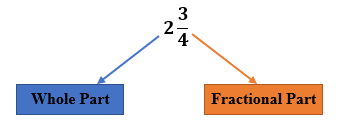
Mixed Fractions-A whole number and a proper fraction together into one mixed number makes a mixed fraction.
Source: Kapdec.com
It is read as whole part first followed by fraction, i.e., in the above case it is read as “two- three by four”.
All the above numbers have two parts i.e. the whole number and the proper fraction.
Thus, they represent mixed fractions.
Improper fractions or Mixed Fractions?
We can use either a mixed fraction or an improper fraction to show the same amount-
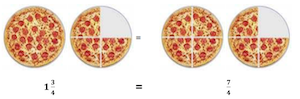
Source: Kapdec.com
Then, what should be used?
Mixed fractions are confusing when we use them in a formula. In such cases, improper fractions are better than mixed fractions.
However, people understand mixed fractions better than improper fractions for everyday use.

Source: Kapdec.com
Converting Improper Fractions to Mixed Fractions
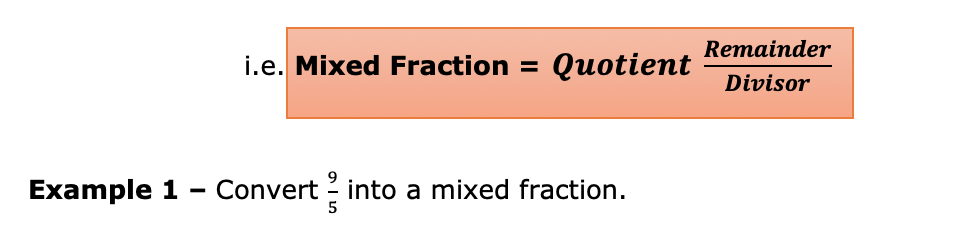
- Divide the numerator of the improper fraction by its denominator.
- Write the quotient we get above as the ‘whole-part’ of the mixed fraction.
- Write the remainder as the numerator and divisor as the denominator of the ‘fractional-part’ of the mixed fraction.
Source: Kapdec.com
- 9 ÷ 5 = 1 with a remainder of 4.
- So, 1 would be written as the whole part followed by 4 as the numerator and 5 as the denominator.
- Thus, the mixed fraction would be 145

Source: Kapdec.com

Source: Kapdec.com
- 13 ÷ 4 = 3 with a remainder of 1.
- So, 3 would be written as the whole part followed by 1 as the numerator and 4 as the denominator.
- Thus, the mixed fraction would be 3 ¼
Converting Mixed Fractions to Improper Fractions
- Multiply the whole number part of the mixed fraction with the denominator of its fractional part.
- Add the result we get above with the numerator of the mixed number.
- Write the result we get in step (ii) as the numerator of the improper fraction and the denominator same as that of the mixed fraction.

Source: Kapdec.com
Example 1- Convert i 2 1/5 into improper fraction.
- 5 × 2 = 10
- 10 + 1 = 11
- So, 11 would be the numerator and 5 would be the denominator of the improper fraction.
- Thus, the improper fraction would be 11/5

Source: Kapdec.com
- 11 × 5 = 55
- 55 + 8 = 63
- So, 63 would be the numerator and 11 would be the denominator of the improper fraction.
- Thus, the improper fraction would be 63/11
Like and Unlike Fractions
- A set of fractions in which all the denominators are the same are called like fractions.

Source: Kapdec.com
In all of these fractions, the denominator is same i.e. 9 in this case. So, they are like fractions.
- A set of fractions in which the denominators are different are called unlike fractions.

Source: Kapdec.com
In all of these fractions, the denominators are different. So, they are unlike fractions.
Unit Fractions
- Fractions whose numerator is one are called unit fractions.

Source: Kapdec.com
In all these fractions, the numerator is 1. So, they are called unit fractions.
Equivalent Fractions
Fractions that have the same value though they may be different looking are called equivalent fractions.

Source: Kapdec.com
How are they the same?
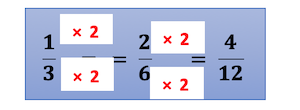
This is because if we multiply or divide both the numerator and denominator by the same number, the fraction does not change its value.
Let’s see how the fractions in the above example are equal-
Source: Kapdec.com
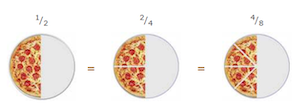
Let us understand this with help of a practical example-
Source: Kapdec.com
As we can see from the above picture, 12,24 and48

Source: Kapdec.com
are three different fractions (visually) but all three represent equal value of half of a pizza. So, they are equivalent fractions.
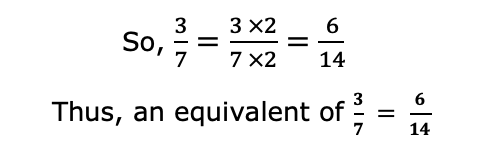
Example 1- Find an equivalent fraction of 37

Source: Kapdec.com
Let us multiply both the numerator and denominator by 2.
Source: Kapdec.com
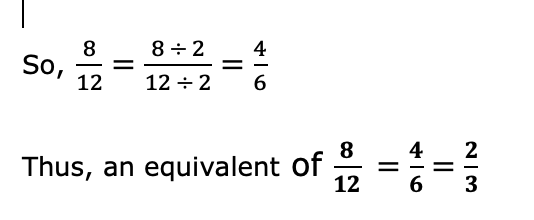
Example 2- Find an equivalent fraction of 812

Source: Kapdec.com
We can see both 8 and 12 are multiples of 2.
Let us divide both the numerator and denominator by 2.
Source: Kapdec.com
Did you know??
The word fraction comes from Latin word ‘fractio’ which means “to break”.
In Ancient Rome, fractions were only written using words to describe part of the whole. They were based on the unit of weight which was called the “as”. One “as” was made up of 12 uncia so fractions were centred on twelfths. For example:
1/12 was called uncia
6/12 was called semis
1/24 was called semuncia
11/44 was called scripulum
As with the Egyptian system, the words made it very difficult to do calculations.
