Unit : Natural selection
Chapter: Artificial selection
Reference: Artificial selection, Artificial selection on wild mustard, Examples – Cow Breeding, Dog Breeding, Advantages of artificial selection, Disadvantages of artificial selection
Learning objectives
- To understand about artificial selection and its advantages
- To learn examples of artificial selection
Artificial selection
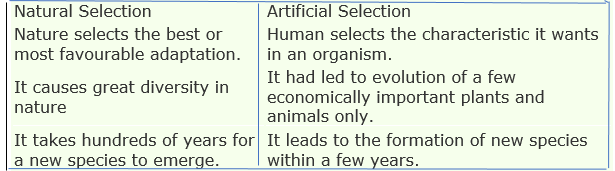
Artificial selection is the intentional breeding of plants or animals. It means the same thing as selective breeding. Selective breeding is a technique where male and female are chosen for their characteristics. It is used in breeding domesticated animals, such as dogs, pigs, or cattle. Some of these animals will have traits that a breeder will want to preserve. E.g., selection of different traits of wild cabbage to get different varieties
Artificial selection on wild mustard
For example, cauliflower, broccoli, cabbage, kale, and kohlrabi bear little superficial resemblance to their wild mustard relatives. And yet, through many generations of artificial selection, these five distinct crops were intentionally evolved from a wild, weedy ancestor.
Examples – Cow Breeding
- Cows have selected bred of many generations to produce offspring with good milk production
- Farmers also targeted the breeding of cows resulting in increased muscle mass
- The resulting stock of cattle has produced more edible lean meat
Dog Breeding
- Dog breeds show the amount of targeted selection of traits by man.
- Hunting dogs (e.g., beagles) are bred to be small as they enter fox holes.
- Racing dogs (e.g., greyhounds) were specially bred as sleek and fast.
- Toy dogs (e.g., chihuahuas) were selected and bred for their size.
Advantages of artificial selection
- It provides higher yields.
- It leads to higher profits.
- It helps eliminate diseases.
- It ensures quality produce.
Disadvantages of artificial selection
- It leads to loss of variety.
- It risks creating new diseases.
- It has no control over genetic mutations.
- It could create a genetic depression.
Solved examples
Example 1. Artificial selection has been a big factor in the evolution of:
a) Dogs b) Panda bears c) Snakes d) Jellyfish
Solution 1: a. Artificial selection has been a big factor in the evolution of dogs.
Example 2. The following is a similarity between artificial selection and natural selection
a) Takes hundreds of years b) Humans determine traits
c) Nature determines traits d) Offspring are produced
Solution 2: d. The similarity between artificial selection and natural selection is offspring are produced.
Summary
- Artificial selection is the intentional breeding of plants or animals. It means the same thing as selective breeding.
- Biological constraints always limit how a character may become excessive in an organism.
- Cows have selected bred of many generations to produce offspring with good milk production
- Dog breeds show the amount of targeted selection of traits by man.
- Cauliflower, broccoli, cabbage, kale, and kohlrabi bear little superficial resemblance to their wild mustard relatives