Unit: Linear Functions
Graphing of Linear Functions, Rate of Change, Growth and Decay
Linear functions are a specific type of function that create straight lines when graphed. They are fundamental in algebra and widely used to model relationships between variables.
Definition and General Form
A linear function is a function that can be written in the form: f(x)=mx+b where:
- f(x) or y is the output or dependent variable.
- x is the input or independent variable.
- m is the slope of the line.
- b is the y-intercept, the point where the line crosses the y-axis.
Characteristics of Linear Functions
- Constant Rate of Change:
- The slope m represents the constant rate of change of the function.
- For every unit increase in x, y increases by m.
- Straight Line Graph:
- The graph of a linear function is always a straight line.
- Intercepts:
- Y-Intercept: The value of y when x=0, given by b.
- X-Intercept: The value of x when y=0, found by solving mx+b=0.
- Domain and Range:
- The domain of a linear function is all real numbers, (−∞,∞).
- The range of a linear function is all real numbers, (−∞,∞).
Slope and Y-Intercept
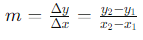
- Slope (m):
- Describes the steepness and direction of the line.
- Calculated as:
-
- Positive slope: line rises from left to right.
- Negative slope: line falls from left to right.
- Zero slope: horizontal line.
- Undefined slope: vertical line.
- Y-Intercept (b):
- The point where the line crosses the y-axis.
- Found by setting x=0 in the equation f(x)=mx+b.
Example
For the linear function f(x)=3x+2:
- Slope (m): 3
- Y-Intercept (b): 2
Graphing Linear Functions
To graph a linear function, follow these steps:
- Identify the Slope and Y-Intercept:
- From the equation f(x)=mx+b.
- Plot the Y-Intercept:
- Locate the point (0,b) on the graph.
- Use the Slope to Find Another Point:
- From the y-intercept, use the slope 𝑚m (rise over run) to find another point.
- Example: For m=3, from (0,2), move up 3 units and right 1 unit to (1,5).
- Draw the Line:
- Connect the points with a straight line extending in both directions.
Example
Graph the function f(x)=−2x+4:
- Slope m=−2
- Y-Intercept b=4
- Plot the y-intercept (0,4).
- Use the slope to find another point: From (0,4), move down 2 units and right 1 unit to (1,2).
- Draw the line through (0,4) and (1,2).
Linear Function Applications
Linear functions are used in various real-life scenarios, including:
- Business and Economics:
- Cost Functions: Representing the total cost as a function of the number of units produced.
- Revenue Functions: Representing total revenue as a function of the number of units sold.
- Physics:
- Motion: Representing the relationship between distance and time for objects moving at constant speed.
- Everyday Situations:
- Budgeting: Modelling expenses over time.
- Conversion: Converting units, such as temperature or currency exchange rates.
Example
A taxi company charges a flat fee of $3 plus $2 per mile driven. The cost C of a trip that covers x miles can be modelled by the linear function: C(x)=2x+3
- Slope (m): $2 per mile.
- Y-Intercept (b): $3 (flat fee).
Summary
- Definition: Linear functions are written as f(x)=mx+b.
- Characteristics: Constant rate of change, straight-line graph, intercepts, and an infinite domain and range.
- Slope and Y-Intercept: The slope measures steepness and direction, while the y-intercept indicates where the line crosses the y-axis.
- Graphing: Identify slope and y-intercept, plot points, and draw the line.
- Applications: Used in business, physics, and daily life to model linear relationships.
Understanding linear functions is crucial for solving problems and modelling relationships in various disciplines.