Unit: Application of Integrations
Chapter: Modeling Particle Motion & Accumulation Problems
Reference: – Motion Particle, Differentiability & Continuity, Increasing & Decreasing functions, Curve sketching, Analysis of a function, Optimization problems, First & Second Derivative test, Related rates, Local extrema, Implicit differentiation & Applications.
After studying this chapter, you should be able to:
- Purpose of topic modeling approach in calculus
- Challenges in particle motion modeling
- Approach & Application with Limitations
Introduction to Topic Modeling
- . Definition and Purpose of Topic Modeling in Calculus
- Topic modeling, traditionally used in natural language processing, can be adapted to analyze and model particle motion and accumulation problems from a calculus perspective.
- In calculus, topic modeling involves using mathematical techniques to identify and analyze key patterns, trends, and behaviors in particle motion and accumulation.
- The purpose of topic modeling in calculus is to provide a structured framework for understanding, predicting, and optimizing particle behavior based on mathematical principles.
- Key Concepts and Techniques Used in Topic Modeling
- Derivatives: Calculus offers derivatives as a fundamental tool for studying rates of change in particle motion. Derivatives enable the analysis of particle velocity, acceleration, and higher-order rates of change.
- Integrals: Integrals allow for the calculation of accumulated quantities, such as displacement, area, or volume, related to particle motion and accumulation.
- Differential Equations: Differential equations, a core concept in calculus, are employed to model and solve complex interactions among particles, taking into account forces, constraints, and initial conditions.
- Optimization: Calculus optimization techniques, such as finding extrema or minimizing/maximizing functions, can be utilized to optimize particle behavior, trajectories, or accumulation processes.
- Application of Topic Modeling in Particle Motion Analysis using Calculus Tools
- Topic modeling in calculus provides a systematic approach to studying particle motion by applying differentiation and integration techniques to analyze various aspects of particle behavior.
- By utilizing calculus tools, researchers can gain insights into particle velocities, accelerations, displacement functions, and the relationship between particle properties and motion patterns.
- Calculus-based topic modeling enables the identification of critical points, inflection points, and stationary behavior of particles, aiding in the understanding of particle dynamics.
- The integration of calculus with topic modeling allows for the analysis of accumulated quantities, such as particle concentration, mass, or energy, and their evolution over time.
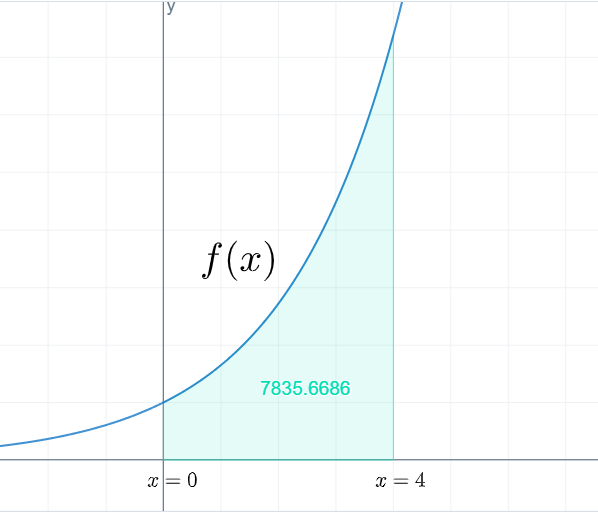
(Accumulation in Topic Modeling)
Purpose of Topic Modeling:-
- Identification: Topic modeling helps identify distinct patterns, trends, and topics within particle motion and accumulation data, enabling a structured understanding of complex phenomena.
- Pattern Recognition: It facilitates the recognition of recurring patterns, behaviors, and relationships in particle motion and accumulation, aiding in data analysis and interpretation.
- Prediction: Topic modeling allows for the prediction of future particle behavior and accumulation patterns based on identified topics and historical data, enhancing forecasting capabilities.
- Optimization: By analyzing particle motion and accumulation patterns, topic modeling assists in optimizing processes, resource allocation, and decision-making to improve efficiency and effectiveness.
- Control: It enables better control and management of particle behavior, trajectories, and accumulation through insights gained from identified topics and patterns.
- Insights and Interpretation: Topic modeling provides valuable insights into the underlying factors influencing particle motion and accumulation, enhancing understanding and interpretation of the data.
- Communication and Visualization: It aids in communicating and visualizing complex particle motion and accumulation of data in a meaningful and intuitive manner, facilitating effective communication and decision-making.
- Interdisciplinary Applications: Topic modeling can be applied across various disciplines, including environmental science, materials science, engineering, and health, to analyze particle behavior and accumulation in diverse contexts.
- Research Advancements: Topic modeling stimulates further research and innovation by providing a structured approach to investigating particle motion and accumulation, leading to discoveries and advancements in the field.
- Real-world Applications: The outcomes of topic modeling in particle motion and accumulation have practical applications in areas such as air pollution modeling, sediment transport analysis, fluid dynamics, and industrial process optimization.
Challenges and Application: –
- Complexity: Topic modeling in calculus can be challenging due to the complexity of mathematical concepts and techniques involved, requiring a solid understanding of calculus principles and their application to particle motion and accumulation problems.
- Data Interpretation: Interpreting and analyzing the results of topic modeling in calculus requires expertise in understanding the mathematical relationships and patterns within the data, which can be complex and nuanced.
- Data Availability and Quality: The success of topic modeling in calculus relies on the availability and quality of data. Insufficient or noisy data can hinder the accuracy and reliability of the models and analysis.
- Model Selection: Choosing the appropriate topic modeling techniques and models in calculus for particle motion and accumulation can be challenging. Different models may be suitable for different scenarios, and selecting the most appropriate one requires careful consideration.
- Computational Requirements: Topic modeling in calculus often involves computationally intensive calculations, especially when dealing with large datasets or complex models. Adequate computational resources and efficient algorithms are necessary to handle these demands.
Applications in Topic Modeling: –
- Particle Trajectory Analysis: Topic modeling in calculus can be used to analyze and predict the trajectories of particles, including their velocity, acceleration, and position functions. This has applications in fields such as physics, robotics, and aerospace engineering.
- Accumulation and Integration Problems: Calculus-based topic modeling enables the analysis of particle accumulation, such as calculating accumulated quantities (e.g., mass, volume) using integrals. This is relevant in areas like environmental science, material science, and fluid dynamics.
Example: -Evaluate 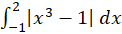
Solution: x3 – 1 ≤ 0 on [–1, 0]
x3 – 1 ≤ 0 on [0, 1]
x3 – 1 ≥ 0 on [1, 2]

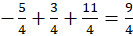
= 
= 
= 
= 
Key Points
- Topic modeling in calculus provides a structured framework for analyzing and understanding particle motion and accumulation problems from a mathematical perspective.
- The purpose of topic modeling in calculus is to identify patterns, trends, and relationships in particle behavior and accumulation through the application of calculus techniques.
- Key concepts used in topic modeling in calculus include derivatives, integrals, differential equations, and optimization techniques.
- Topic modeling in calculus allows for the prediction of particle behavior, optimization of processes, and control of particle motion and accumulation.
- Challenges in topic modeling in calculus include the complexity of mathematical concepts, data interpretation, data availability and quality, model selection, and computational requirements.
- Applications of topic modeling in calculus include analyzing particle trajectories, studying accumulation and integration problems, optimizing particle behavior, modeling complex interactions, environmental and health analysis, industrial process optimization, interdisciplinary research, and educational purposes.
- Topic modeling in calculus provides quantitative insights into particle behavior, allowing for precise analysis and interpretation of motion and accumulation data.
- It enhances the predictability of particle behavior by identifying patterns and trends that can be used for forecasting future particle motion and accumulation.
- Through optimization techniques, topic modeling in calculus aids in improving the efficiency and effectiveness of processes involving particle motion and accumulation.
- The integration of topic modeling in calculus with other disciplines fosters interdisciplinary research opportunities and advancements in understanding and modeling particle behavior and accumulation.