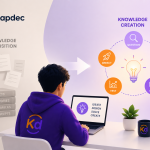
Discover how elite students create personal learning systems that compound over time using effective note-taking, knowledge management, spaced repetition, and mentorship to achieve lasting academic success.
How Elite Students Create Personal Learning Systems That Compound Over Time
How Elite Students Create Personal Learning Systems That Compound Over Time is one of the biggest reasons some students continue improving year after year while others repeatedly feel as though they are starting over.
Many students believe academic success depends primarily on intelligence or the number of hours they study. While both factors matter, elite learners often rely on something much more powerful—a personal learning system.
Instead of approaching every subject independently, they build organized systems that capture knowledge, reinforce understanding, and make future learning easier. These systems create momentum that compounds over months and years, allowing students to retain information more effectively and tackle increasingly complex material with confidence.
As education becomes more demanding and information continues to expand, students who develop efficient learning systems gain an advantage that extends well beyond exams.
Why Learning Systems Outperform Motivation
One reason behind How Elite Students Create Personal Learning Systems That Compound Over Time is that systems create consistency.
Motivation naturally fluctuates.
Some days students feel highly productive, while other days they struggle to concentrate.
Elite students reduce their dependence on motivation by creating repeatable learning habits.
Their systems often include:
- organized study schedules
- structured review sessions
- clear learning goals
- progress tracking
- regular reflection
These routines make learning predictable and sustainable, helping students continue improving even during busy or stressful periods.
How Effective Note-Taking Improves Long-Term Learning
Elite students view note-taking as more than simply copying information.
Their notes become thinking tools.
Rather than recording every detail, they organize concepts into meaningful structures that are easy to review and understand later.
Strong note-taking systems often include:
- concept summaries
- diagrams and visual connections
- key questions
- worked examples
- personal explanations
Methods such as the Cornell Note-Taking System encourage students to actively process information rather than passively record it.
Well-organized notes reduce revision time while strengthening conceptual understanding [1].
Why Knowledge Management Creates Academic Momentum
Learning does not happen in isolated chapters.
Each new concept builds upon previous knowledge.
Elite students create personal knowledge management systems that help them organize information across subjects and over time.
These systems may include:
- digital notebooks
- searchable folders
- linked concepts
- topic summaries
- revision databases
Instead of repeatedly searching for old materials, students build a personal knowledge library that grows throughout their academic journey.
This organization makes future learning faster and more efficient [2].
How Spaced Repetition Strengthens Memory
Another reason behind How Elite Students Create Personal Learning Systems That Compound Over Time is the use of spaced repetition.
Many students review information only before exams.
Elite learners review important material repeatedly over increasing intervals.
Research from the Kapdec shows that spaced repetition significantly improves long-term retention compared with cramming.
Benefits include:
- stronger memory
- reduced forgetting
- improved recall
- deeper understanding
- greater exam confidence
This strategy allows students to maintain knowledge over months and even years.
Why Reflection Accelerates Improvement
Elite students regularly evaluate how they learn.
After completing assignments, projects, or exams, they often ask themselves:
- What worked well?
- Where did I struggle?
- Which strategies were most effective?
- How can I improve next time?
Reflection transforms every learning experience into an opportunity for continuous improvement.
Rather than repeating mistakes, students steadily refine their systems over time.
How Mentorship Strengthens Learning Systems
Building effective learning systems is easier with guidance.
Mentors help students identify which strategies produce the greatest long-term benefits.
They provide support by helping students:
- organize study plans
- prioritize important concepts
- improve note-taking techniques
- strengthen review habits
- develop efficient learning workflows
Rather than simply helping students complete assignments, mentors help them become more effective learners.
These improvements continue benefiting students long after individual lessons end.
How Kapdec Helps Students Build Lasting Academic Systems
Kapdec’s mentorship-driven approach aligns closely with the principles behind How Elite Students Create Personal Learning Systems That Compound Over Time.
Kapdec encourages students to build learning habits that generate continuous academic growth instead of short-term performance improvements.
Students receive guidance in:
- structured study planning
- effective note-taking
- concept mastery
- strategic revision
- long-term academic development
Instead of relying solely on exam preparation, students develop personalized systems that improve learning efficiency throughout their academic careers.
You can also explore our internal guide on Why High Performers Treat Learning Like Athletic Training to discover how disciplined systems produce consistent academic excellence.
Why Learning Systems Compound Like Investments
Strong learning systems create benefits that multiply over time.
Students who consistently organize knowledge, review strategically, and refine their learning habits experience cumulative improvements in:
- academic confidence
- retention
- critical thinking
- problem-solving
- independent learning
Just as financial investments compound through consistent contributions, effective learning systems generate increasing academic returns year after year.
FAQ’s
What is a personal learning system, and why do elite students use one?
A personal learning system is a structured approach to organizing, reviewing, and applying knowledge over time. Instead of relying on last-minute studying or motivation, elite students develop routines for note-taking, revision, and reflection that help them learn more efficiently. These systems create consistency and allow knowledge to build gradually, leading to stronger long-term academic performance.
How does effective note-taking improve learning outcomes?
Effective note-taking goes beyond copying information from textbooks or lectures. It helps students organize ideas, identify key concepts, and make connections between topics. By writing summaries, creating diagrams, and adding personal explanations, students actively process information, making it easier to understand, remember, and review later.
Why is spaced repetition considered one of the most effective study techniques?
Spaced repetition strengthens long-term memory by reviewing information at increasing intervals instead of cramming before exams. This method helps reduce forgetting, improves recall, and reinforces understanding over time. Students who consistently revisit important concepts are often able to retain knowledge for months or even years rather than just until the next test.
What is knowledge management, and how does it help students?
Knowledge management is the process of organizing and storing information so it can be easily accessed and connected later. Students may use digital notebooks, folders, flashcards, or concept maps to manage their learning. An organized knowledge system saves time during revision and helps students build on previous learning instead of repeatedly starting from scratch.
How does regular reflection improve academic performance?
Reflection helps students evaluate what is working and identify areas for improvement. After completing assignments or exams, elite students often review their study methods, mistakes, and successes. This habit allows them to refine their learning strategies, avoid repeating errors, and continuously improve the effectiveness of their personal learning system.
How can mentorship help students build a stronger learning system?
Mentors help students develop personalized strategies that match their goals and learning styles. They provide guidance on effective note-taking, study planning, revision techniques, and time management while encouraging critical thinking and accountability. Over time, mentorship helps students create learning systems that support continuous improvement and long-term academic success rather than short-term exam preparation.
Final Thoughts
How Elite Students Create Personal Learning Systems That Compound Over Time demonstrates that lasting academic success rarely depends on intelligence alone.
Instead, it is built through carefully designed systems that support consistent learning, efficient knowledge management, and continuous improvement.
Elite students organize their notes, revisit concepts through spaced repetition, reflect on their progress, and develop habits that make each new topic easier to master than the last.
With the guidance of experienced mentors and structured learning approaches like those offered by Kapdec, students can transform isolated study sessions into lifelong systems of intellectual growth.
In today’s rapidly evolving educational landscape, students who invest in building effective learning systems are not simply preparing for their next exam—they are building a foundation for sustained academic and professional success.