Explore Academic Success vs Professional Success and learn why initiative, judgment, collaboration, and problem-solving matter beyond academic achievement.
Academic Success vs Professional Success: Why School Skills May Fall Short at Work
Academic Success vs Professional Success reveals an important difference between performing well in structured academic environments and succeeding in the workplace.
Students often learn that success comes from following instructions, meeting deadlines, answering questions correctly, and satisfying clearly defined expectations. These skills are valuable. They help students develop discipline, responsibility, and subject knowledge.
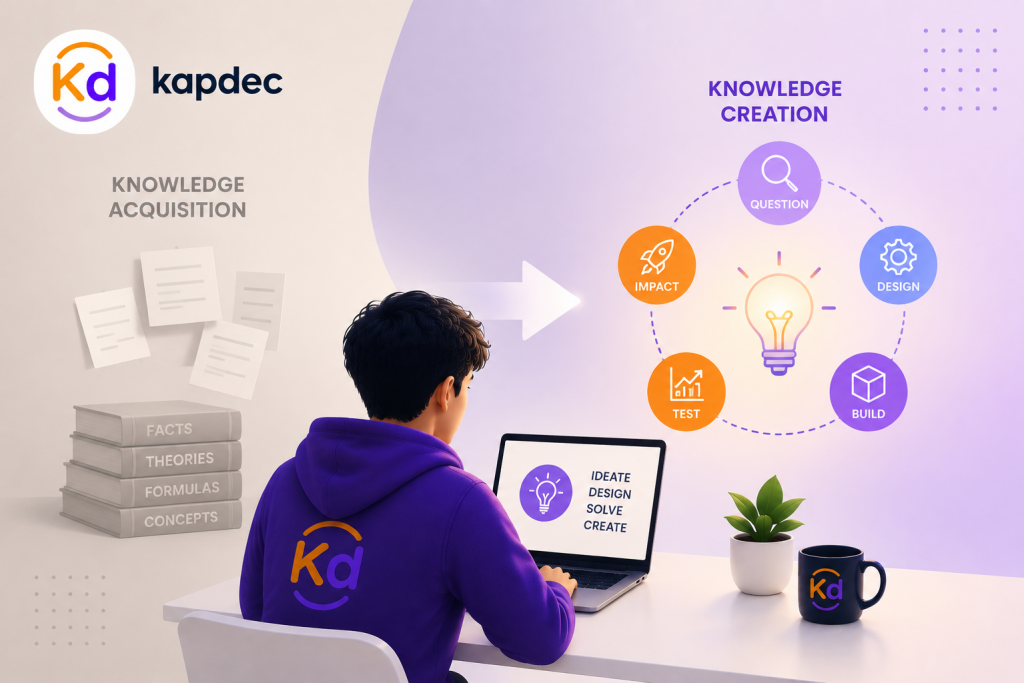
However, professional environments frequently demand something more: the ability to recognize problems, make decisions without complete information, and determine what needs to happen before anyone provides instructions.
This is why some students who excel academically may initially struggle at work. The issue is not necessarily a lack of intelligence or ability. It may be that the workplace requires a different way of thinking.
Why Academic Success Does Not Always Translate Into Workplace Success
Schools and colleges generally provide a defined structure. Students receive assignments, study specified material, follow assessment criteria, and work toward identifiable goals.
Professional life is often less predictable. A manager might explain a business objective without providing a step-by-step plan. A customer problem may have several possible solutions. A project may change direction because of new information or unexpected circumstances.
In these situations, knowing the correct answer is not enough. Employees must determine which questions to ask, which information matters, and how to move forward.
Academic achievement demonstrates important capabilities, but it does not automatically establish how someone will respond to uncertainty, competing priorities, or unfamiliar problems.
The Difference Between Completing Tasks and Identifying Problems
One of the biggest differences between school and work is the distinction between completing an assigned task and recognizing what needs to be done.
A student may receive an assignment with specific instructions and a clear deadline. Success means completing the requirements accurately.
At work, an employee might notice that customers repeatedly experience the same problem. Rather than waiting for a manager to assign a solution, the employee may need to investigate the pattern, identify its cause, and recommend an improvement.
The first situation rewards execution. The second requires initiative.
Both abilities matter, but professional environments often place greater responsibility on employees to recognize opportunities and take appropriate action.
Students can begin developing this ability by asking themselves: What problem is this task trying to solve, and is there a better way to approach it?
Why Workplace Success Requires Comfort With Ambiguity
Academic assessments often reward answers that can be checked against an expected solution. Professional challenges, however, may not have one obviously correct answer.
A marketing team deciding how to reach a new audience might consider several strategies. Each option could involve different costs, risks, and potential benefits. The team must evaluate evidence, discuss alternatives, and make a reasonable decision without knowing the outcome in advance.
Employees accustomed to waiting for certainty may find these situations uncomfortable. They might delay decisions, seek excessive approval, or hesitate to suggest an unfamiliar approach.
Developing professional judgment means learning to make informed decisions with the information available, recognize limitations, and adjust when new evidence appears [1].
Mistakes will still happen. What matters is the ability to evaluate them, learn from the results, and respond constructively.
How Initiative, Collaboration, and Judgment Change the Equation
Professional success depends on more than individual performance. Employees must work with people who have different responsibilities, perspectives, communication styles, and priorities.
A student may complete an excellent individual assignment but struggle when a workplace project requires negotiation, shared responsibility, and coordination across teams.
Similarly, following instructions precisely is useful, but employees also need judgment to recognize when instructions are unclear, circumstances have changed, or a different approach may be more effective.
These capabilities become particularly important when employees must balance speed, quality, customer needs, and business objectives.
Initiative does not mean acting without permission or ignoring established processes. It means recognizing when action is needed, communicating thoughtfully, and taking responsibility within appropriate boundaries.
How Schools and Colleges Can Bridge the Gap
Schools and colleges can help students prepare for professional life by introducing experiences that require independent thinking and practical decision-making.
Useful approaches include:
- Real-world projects: Give students problems with several possible solutions instead of only predefined exercises.
- Group assignments: Ask students to divide responsibilities, resolve disagreements, and deliver a shared outcome.
- Internships: Allow students to experience workplace expectations, changing priorities, and professional communication.
- Open-ended assessments: Evaluate reasoning, decision-making, and the ability to explain different approaches.
- Reflection activities: Encourage students to consider what went wrong, what they would change, and what they learned from the experience.
These activities complement academic learning rather than replace it. Strong subject knowledge remains essential; practical experiences help students apply that knowledge in less predictable situations.
How Kapdec Can Support the Transition From School to Work
At Kapdec, developing deeper understanding and independent problem-solving can help students build capabilities that extend beyond examinations.
When students explain their reasoning, explore alternative approaches, collaborate with peers, and work through unfamiliar questions, they begin practicing skills that are valuable in higher education and professional environments.
You can also explore our articles “Why Learning to Explain Difficult Ideas May Be the Most Underrated STEM Skill” and “Why the Best STEM Students Learn to Think Like Innovators, Not Just Test Takers.” Both connect academic learning with the ability to communicate ideas and approach problems thoughtfully.
FAQ’s
Why do some academically successful students struggle in the workplace?
Some academically successful students struggle at work because academic environments often provide clear instructions, defined expectations, and specific answers, while professional environments require independent judgment and decision-making. At work, employees may need to identify problems, manage changing priorities, communicate with different people, and take initiative without waiting for detailed instructions. These challenges do not mean academic achievement is unimportant; they highlight the need to complement subject knowledge with practical workplace skills.
What is the difference between academic success and professional success?
Academic success is often measured through grades, examinations, assignments, and subject knowledge. Professional success involves applying knowledge to real-world situations while demonstrating communication, collaboration, adaptability, initiative, and problem-solving abilities. A student might perform exceptionally well on an examination but need experience to manage an unpredictable project or resolve a customer issue. Both forms of success require effort and learning, but professional environments often place greater emphasis on judgment and practical outcomes.
Why is following instructions not always enough to succeed at work?
Following instructions helps employees complete tasks accurately, meet deadlines, and maintain consistent standards. However, workplaces also expect employees to recognize when something is going wrong or when an existing process could be improved. For example, an employee who repeatedly notices delays in a reporting process may be expected to investigate the cause and suggest a solution rather than simply continue following the same steps. Professional success therefore requires balancing reliable execution with initiative and thoughtful decision-making.
How does ambiguity affect students transitioning into professional life?
Ambiguity can be challenging for students who are accustomed to questions with one correct answer and clearly defined assessment criteria. In professional settings, goals may be broad, information may be incomplete, and several solutions may be reasonable. Employees must evaluate available evidence, consider risks, ask useful questions, and make informed decisions despite uncertainty. Developing comfort with ambiguity helps new professionals become more adaptable, confident, and capable of handling unfamiliar challenges.
How can schools and colleges prepare students for real-world workplace challenges?
Schools and colleges can prepare students by combining academic learning with practical experiences. Real-world projects, internships, group assignments, presentations, and open-ended problems encourage students to apply knowledge rather than simply memorize information. These activities also help learners develop teamwork, communication, critical thinking, and responsibility. Reflecting on mistakes and explaining why they chose a particular solution can further strengthen the judgment students will need in professional environments.
Which skills should students develop to succeed both academically and professionally?
Students should develop a combination of subject knowledge, critical thinking, communication, collaboration, adaptability, and independent problem-solving. Time management and attention to detail remain important, but learners should also practice identifying problems, evaluating alternatives, asking thoughtful questions, and taking responsibility for their decisions. These capabilities help students perform well in structured academic settings while preparing them to handle the uncertainty and changing expectations of professional life.
Final Thoughts
The difference between academic and professional success is not that school skills suddenly become useless after graduation. Discipline, knowledge, accuracy, and the ability to follow through remain essential.
The challenge is that professional life demands additional capabilities: initiative, collaboration, independent judgment, and the willingness to act when the answer is not obvious.
Students are better prepared for this transition when they learn not only how to complete tasks but also how to identify problems, evaluate possibilities, and take responsibility for outcomes.
Ultimately, education prepares students most effectively when it teaches them both how to find answers and how to think when no clear answer exists.