Discover how Micro-Education is transforming learning through short, outcome-driven programs that deliver faster results, better engagement, and practical skills.
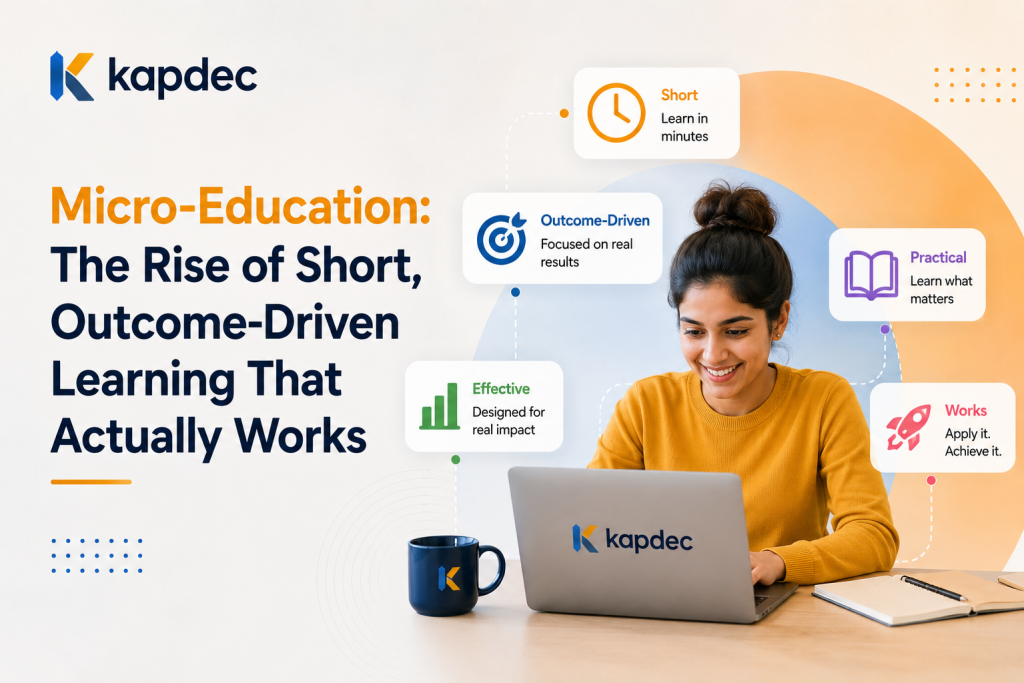
Micro-Education Is Changing the Future of Learning
Micro-Education is rapidly becoming one of the most effective learning models in modern education. Traditional education systems often rely on long courses, fixed schedules, and information-heavy learning.
But students today learn differently.
Attention spans are shorter. Career requirements change faster. Students and parents now want measurable outcomes, not endless theory.
This is where Micro-Education stands out.
Instead of overwhelming students with massive amounts of information, it focuses on short, targeted, and outcome-driven learning experiences.
Why Traditional Learning Models Are Losing Effectiveness
Traditional learning often follows a predictable structure:
- long lectures
- broad syllabi
- delayed results
- memorization-heavy teaching
The problem?
Students frequently forget what they learn because the content feels disconnected from real goals.
According to Kapdec, Students retain knowledge better when learning is focused, active, and connected to practical application.
This is one reason why Micro-Education is gaining momentum.
It reduces unnecessary learning overload and focuses directly on outcomes.
What Makes Micro-Education Different
Micro-Education focuses on:
- short learning modules
- specific outcomes
- skill-focused teaching
- personalized learning paths
Instead of studying a subject for months without clarity, students work toward measurable improvements in smaller stages.
For example:
- improving SAT algebra accuracy
- mastering Python basics
- learning essay-writing frameworks
- strengthening interview communication
This creates faster progress and stronger motivation [1].
Why Outcome-Driven Learning Works Better
Students stay engaged when they can clearly see progress.
That is the core strength of Micro-Education.
Outcome-driven learning helps students:
- focus on practical goals
- avoid burnout
- learn faster through structured systems
- build confidence through quick wins
Platforms like Kapdec support mastery-based learning, but the growing demand today is for shorter and more personalized educational experiences.
Students no longer want to “study everything.”
They want to solve specific problems efficiently.
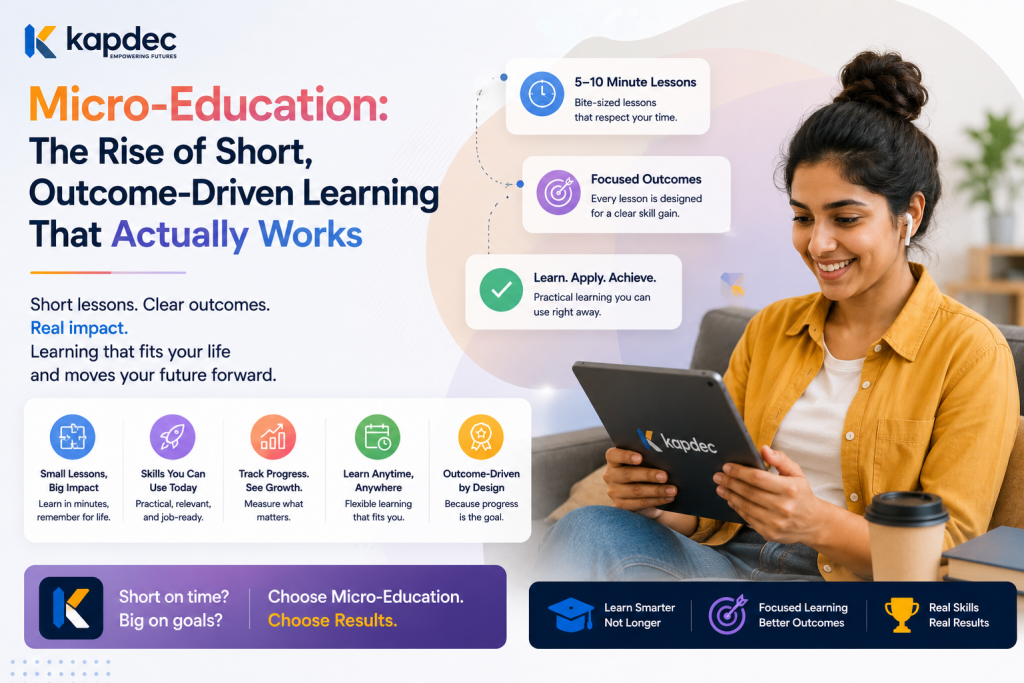
How Micro-Education Aligns with Modern Careers
The world changes too quickly for outdated learning systems.
New tools, technologies, and career skills emerge constantly.
This means students need education that is:
- flexible
- adaptive
- fast-moving
- skill-oriented
Micro-Education helps students stay competitive because it focuses on real-world application instead of passive information consumption.
This is especially important in areas like:
- coding
- SAT and ACT preparation
- business skills
- communication
- data science
Short, focused learning programs often produce better results than long, generalized courses.
Why Mentorship Matters in Micro-Education
Short learning alone is not enough.
Students still need guidance.
Without mentorship, many students struggle with:
- consistency
- accountability
- confidence
- strategic learning
You can also explore our internal guide on Outcome-Based Learning Plans to understand how structured mentorship improves measurable results.
This is why the best version of Micro-Education combines:
- focused learning
- mentorship-driven support
- measurable outcomes
That combination creates real transformation.
How Kapdec Supports the Future of Micro-Education
Kapdec aligns strongly with the future of Micro-Education by focusing on:
- premium tutors
- practitioner-led education
- personalized learning plans
- outcome-driven mentorship
Instead of promoting endless classes, Kapdec emphasizes measurable improvement and high-impact learning.
Students receive:
- focused academic strategies
- structured learning systems
- mentorship beyond content
This creates a premium educational experience built around outcomes, not just hours taught [2].
Why Students and Parents Prefer Micro-Education
Students prefer Micro-Education because it feels:
- practical
- faster
- more engaging
- less overwhelming
Parents prefer it because they can clearly measure:
- skill improvement
- confidence growth
- academic outcomes
- return on investment
Education is moving away from “time spent learning” toward “results achieved.”
That is why Micro-Education is growing so rapidly.
FAQ’s
What is Micro-Education?
Micro-Education is a modern learning approach that focuses on short, targeted, and outcome-driven lessons instead of long and broad courses. The goal is to help students master specific skills or concepts quickly and efficiently. Rather than spending months on generalized learning, students focus on measurable improvements in smaller learning modules.
Why is Micro-Education becoming more popular?
Micro-Education is growing because students and parents now want faster, more practical learning outcomes. Traditional education can often feel overwhelming and time-consuming, while Micro-Education offers focused learning with clear goals. It also fits better with modern attention spans, busy schedules, and rapidly changing career demands.
How is Micro-Education different from traditional learning?
Traditional learning usually covers large syllabi over long periods, often with delayed results. Micro-Education breaks learning into smaller, focused sections designed to solve a specific problem or build a particular skill. This makes learning more engaging, easier to track, and often more effective.
Can Micro-Education improve academic performance?
Yes, because Micro-Education helps students focus deeply on weak areas or important skills without unnecessary distractions. Students often learn faster and retain information better when they work toward clear, short-term outcomes. This structured approach improves confidence and consistency in learning.
Is mentorship important in Micro-Education?
Absolutely. While Micro-Education provides focused learning, mentorship ensures students stay accountable, motivated, and strategically guided. Mentors help students understand what to focus on, how to improve, and how to apply what they learn effectively. This combination creates much stronger long-term results.
Why are platforms like Kapdec aligned with Micro-Education?
Kapdec focuses on outcome-based learning, premium mentorship, and personalized education, which naturally aligns with the Micro-Education model. Instead of endless generic classes, the platform emphasizes measurable progress, focused learning plans, and guidance from experienced mentors. This creates a more practical and high-impact learning experience for students.
Final Thoughts
Micro-Education represents the future of meaningful learning.
Students no longer need endless information.
They need focused learning experiences that create measurable progress.
Short, outcome-driven education works because it aligns with how modern students learn, think, and grow.
But the real magic happens when focused learning is combined with mentorship and accountability.
Because education is not about consuming more content.
It is about achieving real transformation—faster, smarter, and with purpose.