Student Decision-Making helps high school students build confidence, independence, responsibility, problem-solving skills, and judgment through meaningful real-world experiences.
Student Decision-Making: Why High School Students Need Real Responsibility
Student Decision-Making is a skill that cannot be fully developed through textbooks, assignments, or examinations.
Students can spend years following detailed schedules, completing teacher-selected assignments, and preparing for standardized tests without getting many opportunities to make meaningful decisions of their own.
Yet adulthood requires constant judgment.
What should I prioritize?
How should I solve this problem?
Which option makes the most sense?
What should I do when something goes wrong?
These questions cannot always be answered by a formula.
Students need opportunities to practice making decisions while they are still in environments where mistakes can become learning experiences.
Why Student Decision-Making Matters in High School
Traditional academic environments often provide students with clearly defined instructions.
Teachers determine the topic.
The assignment has a deadline.
The grading criteria are established.
The correct answer may already exist.
This structure is useful for learning foundational knowledge, but it does not always develop judgment.
Student Decision-Making requires students to evaluate choices, consider consequences, manage uncertainty, and take responsibility for outcomes.
Those experiences require something different from simply answering examination questions.
How Real Choices Teach Different Skills
Consider a student completing a group project.
Instead of receiving every instruction from a teacher, the students might have to decide:
- What topic should we investigate?
- Who should handle each responsibility?
- How should we divide the workload?
- What should we do if someone misses a deadline?
- How should we present our findings?
- What changes are necessary when the original plan fails?
There may not be one perfect answer.
Students have to discuss possibilities, make a choice, and evaluate the result.
That process develops judgment in a way that conventional question-and-answer exercises cannot completely replicate [1].
Responsibility and Confidence Grow Together
Confidence does not always come from being told that you are capable.
Sometimes it comes from experiencing responsibility and successfully handling it.
When a student organizes an event, leads a club meeting, manages a project, or coordinates a team, they experience the consequences of their decisions.
Even a small successful experience can create an important realization:
“I can handle this.”
That belief can influence how students approach future challenges.
Instead of automatically waiting for an adult to provide instructions, they may become more willing to analyze situations and propose solutions independently.
Why Small Mistakes Can Be Valuable
Students need environments where mistakes are taken seriously but are not treated as permanent failures.
A student-led event might experience poor scheduling.
A project team might divide responsibilities inefficiently.
A club activity might receive less participation than expected.
These outcomes can be frustrating, but they can also teach lessons that a perfect classroom exercise cannot.
Students can ask:
What went wrong?
Which decision contributed to the problem?
What could we change next time?
This process turns mistakes into feedback.
The goal is not to encourage careless decisions. It is to give students controlled opportunities to experience consequences while teachers and mentors are still available to guide them.
Student Decision-Making Through Clubs and Projects
Student-led activities can provide particularly valuable opportunities for ownership.
A school club could allow students to decide its theme, organize meetings, plan competitions, invite speakers, or create campaigns.
Similarly, project-based learning can give students greater control over research questions, methods, presentations, and outcomes.
The difference is ownership.
When students simply complete an assigned activity, responsibility often ends with submitting the work.
When students design and manage an activity themselves, they become responsible for the process as well as the result.
That experience can strengthen initiative, communication, teamwork, and problem-solving.
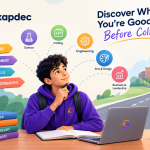
You can also explore [Why High School Students Should Stop Waiting for College to Discover What They’re Good At] for more on how independent exploration can help students identify their strengths.
The Teacher’s Role: Guide, Don’t Control
Giving students responsibility does not mean teachers should disappear.
The most effective approach is often guided independence.
Teachers can establish boundaries, explain expectations, ask questions, and provide feedback without making every decision for students.
Instead of saying:
“Do this.”
A teacher might ask:
“What approach do you think would work, and why?”
Instead of immediately solving a problem, the teacher can help students evaluate their options.
This changes the teacher’s role from decision-maker to mentor.
Students still receive support, but they gradually become responsible for thinking through their own choices.
Responsibility Before Adulthood
Students eventually leave school and enter environments where decisions have greater consequences.
College students manage schedules and academic priorities.
Young professionals make workplace decisions.
Adults manage finances, relationships, responsibilities, and long-term goals.
Waiting until adulthood to develop judgment is unnecessary.
High school can provide a safer environment in which students begin practicing these skills.
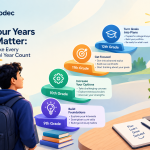
This connects with the broader idea explored in [The Four Years That Matter: How to Make Every High School Year Count], where high school becomes more than a period of academic preparation—it becomes a period for developing habits and capabilities that students carry forward.
How Kapdec Can Encourage Independent Thinking
Kapdec’s mentorship-based learning approach can support Student Decision-Making by giving students opportunities to think through challenging questions rather than simply follow predetermined answers.
Strong academic mentorship can help students understand why a particular approach works while still allowing them to develop their own reasoning.
The objective is not to remove guidance.
It is to gradually increase student ownership.
FAQ’s
Why is Student Decision-Making important for high school students?
Student Decision-Making helps teenagers develop skills that cannot be learned entirely through textbooks and examinations. In real situations, students need to evaluate options, consider consequences, solve unexpected problems, and take responsibility for their choices.
Giving students opportunities to make meaningful decisions during high school allows them to practice these skills while they still have teachers and mentors available to provide guidance. Over time, this can help students become more confident, responsible, and independent thinkers.
How is making real decisions different from answering exam questions?
Exam questions usually have clearly defined instructions, expectations, and often a correct answer. Real decisions are more open-ended. Students may need to compare several possible approaches and decide which one is most appropriate.
For example, solving a mathematics problem teaches analytical reasoning, while deciding how to divide responsibilities during a group project also requires communication, judgment, negotiation, and accountability. Both experiences are valuable, but they develop different dimensions of a student’s ability to think and act independently.
How does responsibility help students become more confident?
Responsibility can strengthen confidence because students experience the results of their own efforts and decisions. When a student successfully leads a project, organizes an activity, or manages part of a team, they gain evidence that they can handle responsibility.
This confidence is different from simply being told that they are capable. It develops through experience. Even when a decision does not produce the expected result, students can learn to analyze what happened and make a better choice next time.
Are mistakes useful for developing Student Decision-Making skills?
Yes. Small mistakes can become valuable learning experiences when they happen in a safe and supportive environment. A student might underestimate how long a project will take, assign responsibilities poorly, or choose an ineffective approach.
Instead of treating the mistake only as failure, teachers can help students examine the decision behind it. What information was available? What was overlooked? What could be changed? This reflection teaches students how to improve their judgment and prepare for more complex decisions in the future.
How can schools give students more opportunities to make real decisions?
Schools can create opportunities through student-led clubs, project-based learning, competitions, events, presentations, and community activities. Students can be allowed to choose topics, organize teams, plan activities, distribute responsibilities, and determine how they present their work.
The level of responsibility can gradually increase with age and experience. Even relatively small decisions can be meaningful when students genuinely own the process rather than simply following instructions provided by an adult.
What role should teachers play when students are making their own decisions?
Teachers should provide guidance without taking complete control. Students still need boundaries, expectations, feedback, and support, particularly when they are dealing with unfamiliar situations.
Instead of immediately providing the answer, teachers can ask questions such as, “What options have you considered?” or “What might happen if you choose this approach?” This encourages students to evaluate their choices while still benefiting from an experienced mentor.
Final Thoughts
Student Decision-Making develops through practice.
Students need more than opportunities to find correct answers. They need opportunities to decide what questions to ask, which approaches to try, how to organize their work, and what to do when their plans do not work.
Schools can support this development by creating more student-led projects, clubs, events, competitions, and collaborative activities.
Teachers remain essential—but their role can gradually shift from making decisions for students to helping students make better decisions themselves.