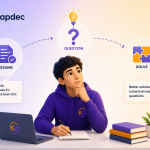
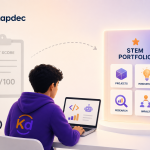
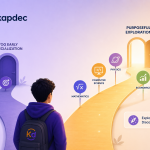
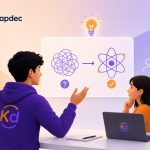
Discover the competitive advantage of students who learn how to learn through metacognition, learning efficiency, adaptability, and mentorship that builds lifelong academic success.
The Competitive Advantage of Students Who Learn How to Learn
The Competitive Advantage of Students Who Learn How to Learn is becoming increasingly evident in today’s rapidly evolving educational landscape. While many students focus on mastering individual subjects, the highest achievers invest in something even more valuable: mastering the learning process itself.
Knowledge changes quickly. New technologies emerge, scientific discoveries reshape existing theories, and industries continuously evolve. Students who understand how to learn can adapt to these changes far more effectively than those who rely solely on memorization or fixed study habits.
Learning how to learn is not a single technique. It is a collection of skills that includes metacognition, efficient study strategies, adaptability, reflection, and continuous improvement. Together, these skills create an academic advantage that compounds throughout school, college, and professional life.
Why Metacognition Is the Foundation of Better Learning
A key reason behind The Competitive Advantage of Students Who Learn How to Learn is metacognition—the ability to think about one’s own thinking.
Metacognitive students regularly ask themselves:
- Do I truly understand this concept?
- Why did I make this mistake?
- Which study method works best for me?
- What should I change before the next assessment?
Instead of studying on autopilot, they actively monitor their understanding and adjust their strategies when necessary.
This self-awareness allows them to learn more efficiently while avoiding repeated mistakes [1].
How Learning Efficiency Creates Long-Term Success
Top students understand that studying longer does not always mean learning better.
Learning efficiency focuses on maximizing understanding while minimizing wasted effort.
Effective learners often use strategies such as:
- active recall
- spaced repetition
- concept mapping
- self-testing
- teaching concepts to others
Research from the Kapdec shows that evidence-based study techniques consistently outperform passive methods like rereading notes or highlighting textbooks.
By choosing better learning strategies, students achieve stronger results without relying solely on additional study hours.
Why Adaptability Matters More Than Ever
Another reason behind The Competitive Advantage of Students Who Learn How to Learn is adaptability.
Modern education is constantly changing.
Students encounter new technologies, evolving curricula, interdisciplinary subjects, and AI-powered learning tools.
Rather than resisting change, adaptable learners quickly modify their approaches to meet new challenges.
They experiment with different resources, adopt improved study techniques, and remain open to feedback.
This flexibility helps them continue progressing regardless of how educational environments evolve.
How Reflection Accelerates Improvement
Elite students treat every assignment, project, and examination as feedback.
Instead of asking only whether they passed or failed, they ask:
- Which mistakes were avoidable?
- What strategy produced the best results?
- Which topics require deeper understanding?
- How can I improve my process?
Reflection transforms each learning experience into an opportunity for continuous refinement.
Over time, these small adjustments produce significant academic gains [2].
Why Learning Skills Outlast Individual Subjects
Subjects may change throughout a student’s education.
Mathematics may lead to engineering.
Biology may lead to medicine.
Computer science may evolve into artificial intelligence.
However, strong learning skills remain valuable regardless of discipline.
Students who know how to:
- organize knowledge
- solve unfamiliar problems
- evaluate information
- adapt quickly
- learn independently
can succeed across a wide range of academic and professional environments.
Their greatest strength is not what they already know but how efficiently they can master something new.
How Mentorship Helps Students Learn How to Learn
Many students never receive formal guidance on effective learning strategies.
Mentorship fills this gap by helping students develop personalized systems for academic success.
Mentors assist students in:
- identifying effective study methods
- building consistent learning habits
- improving time management
- strengthening critical thinking
- reflecting on academic performance
Rather than simply helping students complete assignments, mentors teach them how to become independent, confident learners.
This creates benefits that continue long after individual courses have ended.
How Kapdec Helps Students Build Lifelong Learning Skills
Kapdec recognizes that lasting academic success depends on more than subject knowledge alone.
Its mentorship-driven approach helps students develop the principles behind The Competitive Advantage of Students Who Learn How to Learn by focusing on:
- metacognitive thinking
- evidence-based study strategies
- adaptive learning
- structured academic planning
- long-term intellectual growth
Instead of preparing students only for their next examination, Kapdec helps them build skills that support continuous learning throughout school, university, and future careers.
You can also explore our internal guide on How Elite Students Create Personal Learning Systems That Compound Over Time to discover how structured learning habits lead to sustained academic excellence.
Why Learning How to Learn Is the Ultimate Academic Edge
Information will continue expanding throughout the coming decades.
Students cannot memorize everything they will eventually need to know.
The students who consistently succeed will be those who can quickly understand new concepts, evaluate information critically, and apply knowledge effectively.
Learning how to learn transforms education from a series of isolated courses into a lifelong process of growth and discovery.
It is one of the few competitive advantages that continues increasing in value over time.
FAQ’s
What does “learning how to learn” actually mean?
Learning how to learn is the ability to understand and improve your own learning process rather than simply memorizing information. It involves using effective study strategies, reflecting on what works best, managing time wisely, and adapting to different subjects. Students who develop this skill can learn new concepts more quickly and retain knowledge more effectively throughout their academic journey.
What is metacognition, and why is it important for academic success?
Metacognition is the practice of thinking about your own thinking and learning. It involves evaluating whether you truly understand a concept, recognizing mistakes, and adjusting your study methods when necessary. Students with strong metacognitive skills become more independent learners because they can identify weaknesses early and continuously improve their approach to learning.
How does learning efficiency differ from simply studying longer?
Studying longer does not always lead to better results. Learning efficiency focuses on using evidence-based techniques such as active recall, spaced repetition, self-testing, and concept mapping to maximize understanding in less time. By studying smarter rather than harder, students can improve retention, reduce stress, and achieve better academic outcomes without spending endless hours reviewing material.
Why is adaptability becoming such an important skill for students?
Education and technology are changing rapidly, with new subjects, AI tools, and learning methods emerging regularly. Adaptable students are willing to adjust their strategies, explore new resources, and embrace different ways of learning. This flexibility helps them stay confident and successful even as academic expectations continue to evolve.
How can mentorship help students learn how to learn?
Mentors do more than explain difficult topics—they help students develop personalized learning strategies. They provide guidance on effective study techniques, time management, goal setting, and self-reflection while encouraging critical thinking and independent problem-solving. This support helps students build lifelong learning habits that continue benefiting them well beyond school and college.
Why is learning how to learn considered a lifelong competitive advantage?
Knowledge and industries continue to evolve, making it impossible to rely only on what is learned in school. Students who know how to learn can quickly acquire new skills, adapt to changing technologies, and solve unfamiliar problems throughout their careers. This ability to continuously learn and improve gives them a lasting advantage in higher education, the workplace, and an increasingly fast-changing world.
Final Thoughts
The Competitive Advantage of Students Who Learn How to Learn extends far beyond higher grades or better examination performance.
Students who master the learning process develop greater adaptability, stronger critical thinking, improved efficiency, and lasting intellectual confidence. They understand how to evaluate their progress, refine their methods, and approach new challenges with curiosity rather than uncertainty.
With structured mentorship and personalized guidance from Kapdec, students can build learning habits that continue generating academic success long after individual subjects and examinations are forgotten.
In a world where knowledge evolves constantly, the greatest advantage is not simply knowing more—it is knowing how to keep learning better.