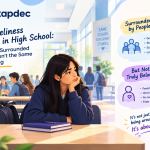
High School Boredom can create space for creativity, reflection, curiosity, and independent thinking in an increasingly connected digital world.
High School Boredom: Why Students Need Time to Be Bored
High School Boredom has become increasingly difficult to experience.
For many students, even a few minutes of waiting can immediately lead to checking a phone, watching a video, scrolling through social media, responding to notifications, or opening another app.
Quiet moments have become moments that need to be filled.
But boredom is not necessarily wasted time.
In fact, periods without entertainment can give the brain an opportunity to wander, reflect, imagine, and explore ideas without being directed by an external source.
The question is not whether students should have more boredom simply for the sake of boredom. The deeper question is whether young people are getting enough unstructured mental space to develop curiosity and independent thinking.
Why High School Boredom Is Becoming Rare
Modern technology makes entertainment almost constantly available.
A student waiting for class can watch a short video. A student traveling home can play a game. A student taking a break can scroll through social media. Even moments before sleeping can become opportunities for digital stimulation.
Notifications reinforce this pattern by repeatedly demanding attention.
The result is a significant change in how students experience empty time.
Instead of asking, “What can I think about?”, they may automatically ask, “What can I watch or do?”
This does not mean technology is inherently harmful. Digital tools can provide tremendous educational and creative opportunities.
The concern is what happens when every quiet moment becomes occupied.
How Boredom Creates Space for Creativity
Boredom can provide something that constant entertainment cannot: mental freedom.
When there is no predetermined activity, students may begin creating their own.
A student might:
- Imagine a story
- Sketch something
- Think about an unusual question
- Explore a personal interest
- Observe their surroundings
- Develop a new project idea
- Reflect on something that happened during the day
These activities may appear unproductive from the outside, but they can create opportunities for imagination and curiosity.
Research and educational discussions around creativity have increasingly emphasized the importance of allowing time for exploration rather than filling every moment with structured activity.
Being Entertained Is Not the Same as Being Engaged
One of the most important distinctions students need to understand is the difference between entertainment and engagement.
Entertainment provides something for the mind to consume.
Engagement requires the mind to participate.
A student can spend an hour watching educational videos without deeply thinking about the ideas presented. Another student might spend twenty minutes trying to understand why a mathematical pattern works.
The second activity may feel more difficult—and occasionally more boring—but it requires active intellectual participation.
This distinction matters in school.
Students accustomed to rapid digital stimulation may find slower activities such as reading, solving difficult problems, writing, or listening to a detailed explanation less immediately exciting.
That does not necessarily mean those activities are ineffective.
It may simply mean students need to rebuild their tolerance for slower forms of engagement [1].
How Constant Stimulation Can Affect the Classroom
Classrooms cannot compete with every feature of the digital entertainment ecosystem—and they should not have to.
A classroom discussion does not change every few seconds.
A mathematics problem may require ten minutes of sustained thinking.
A science experiment may involve waiting, observing, recording, and repeating.
A book may take several hours to understand.
These experiences develop skills that quick digital content often does not require.
If students become accustomed to constant novelty, ordinary academic activities can initially feel unusually slow.
This is one reason helping students develop attention and patience matters.
You can also explore Why Your High School Learning Habits Follow You Into College] to understand how everyday study behaviors can influence the transition to higher education.
Why Unstructured Time Can Reveal Unexpected Interests
Not every meaningful interest begins with a carefully designed lesson.
Sometimes students discover interests because they simply have time to explore.
A teenager who becomes curious about how computers work might start experimenting with coding.
Another student might begin drawing, photography, astronomy, electronics, writing, or music.
The important part is that nobody necessarily assigned the activity.
The student discovered it independently.
That independence can be valuable because it shifts learning from “I have to do this” toward “I want to understand this.”
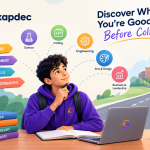
This connects closely with the ideas discussed in Why High School Students Should Stop Waiting for College to Discover What They’re Good At], where exploration becomes a way for students to identify their strengths and interests before making major academic decisions.
How Schools and Families Can Create Healthier Offline Time
The solution is not to eliminate technology.
Instead, schools and families can intentionally create periods where students are not expected to consume constant digital content.
Some practical approaches include:
- Creating device-free study periods
- Encouraging reading without requiring an assignment
- Allowing quiet reflection after activities
- Providing open-ended projects
- Giving students time for independent exploration
- Encouraging outdoor activities without phones
- Creating technology-free family conversations
- Allowing students to experience waiting without immediately reaching for a device
The goal is not to make students uncomfortable.
It is to help them become comfortable with not being constantly stimulated.
How Learning to Tolerate Boredom Builds Independent Thinking
Students who can tolerate boredom have an opportunity to become more comfortable generating their own mental activity.
Instead of waiting for someone else to provide entertainment, they can create questions.
Instead of immediately searching for an answer, they can think about a problem.
Instead of abandoning a difficult task because it feels slow, they can remain with it longer.
These habits are particularly valuable in STEM education.
Advanced mathematics, scientific research, programming, engineering, and other complex fields rarely provide instant answers.
Progress often involves uncertainty, repetition, failed attempts, and long periods of concentration.
That is why developing patience with slower intellectual experiences can become an important part of academic growth.
How Kapdec Can Support Independent Learning
Kapdec’s approach to STEM learning can complement this development by encouraging students to move beyond passive consumption toward deeper understanding and active problem-solving.
Through guided learning, challenging questions, and mentorship, students can develop the ability to remain engaged even when a problem does not provide an immediate reward.
The goal is not simply to keep students busy.
It is to help them become increasingly comfortable thinking for themselves.
FAQ’s
Why is High School Boredom becoming less common among students?
High School Boredom is becoming less common because students have almost constant access to digital entertainment. Smartphones, social media, streaming platforms, games, and notifications can fill even short periods of free time. Instead of sitting quietly or deciding what to do independently, students can immediately turn to a digital activity.
While technology offers many benefits, constantly filling every quiet moment can make students less comfortable with unstructured time. Over time, they may begin to expect continuous stimulation and find slower activities such as reading, problem-solving, or reflection less engaging.
Can boredom actually help high school students become more creative?
Yes. Boredom can create mental space where students have to generate their own ideas instead of simply consuming content created by someone else. When there is nothing immediately available to entertain them, students may begin imagining stories, drawing, asking questions, experimenting, or exploring personal interests.
This does not mean boredom automatically produces creativity. Rather, unstructured time can provide an environment in which creativity has an opportunity to emerge. Students may discover ideas and interests that would never appear when every free moment is occupied by digital entertainment.
What is the difference between being entertained and being mentally engaged?
Being entertained generally means receiving stimulation from an external source, such as watching a video, scrolling through social media, or playing a game. Mental engagement requires the student to actively think, question, create, analyze, or solve something.
For example, watching a science video may be entertaining and educational, but designing an experiment based on the video’s idea requires deeper participation. Helping students understand this difference can encourage them to balance passive digital consumption with activities that require sustained intellectual effort.
How can constant digital stimulation affect students in the classroom?
Constant digital stimulation can make slower-paced classroom activities feel less immediately exciting. A classroom discussion, textbook chapter, mathematics problem, or science investigation may require sustained attention rather than providing something new every few seconds.
This does not mean digital technology directly causes students to lose interest in learning. However, students who are accustomed to rapid changes in content may need time to adjust to activities that demand patience and concentration. Building tolerance for slower experiences can help students remain engaged when learning becomes challenging or requires extended effort.
How can parents and schools give students healthier unstructured time?
Parents and schools can create intentional periods where students are not expected to constantly use a device or participate in a structured activity. This could include device-free study periods, quiet reading, outdoor activities, creative projects, journaling, family conversations, or independent exploration.
The objective should not be to completely remove technology. Instead, students can be encouraged to develop a healthier balance between structured activities, digital entertainment, and offline time. Giving teenagers opportunities to decide how they use their free time can also strengthen independence and self-direction.
How can learning to tolerate boredom improve independent thinking?
Learning to tolerate boredom can encourage students to become more comfortable generating their own questions, ideas, and activities. Instead of immediately searching for entertainment or an answer online, they may spend more time thinking through a problem or exploring an unfamiliar idea.
This can be especially valuable in STEM subjects, where meaningful progress often requires patience. Complex mathematics, programming, engineering, and scientific research rarely provide instant solutions. Students must often experiment, make mistakes, reconsider their approach, and continue working. Becoming comfortable with slower intellectual experiences can therefore support creativity, persistence, curiosity, and independent thinking.
Final Thoughts
High School Boredom is not necessarily something that students need to eliminate.
Sometimes, boredom is simply the space between activities—and that space can be valuable.
When students are not constantly entertained, they have opportunities to imagine, reflect, explore questions, and discover interests that might otherwise remain hidden.
The goal should not be less technology for its own sake.
It should be more intentional technology use and more opportunities for students to experience quiet, unstructured time.
Learning to sit with boredom may ultimately teach students something much more important: how to create their own reasons to think, explore, and learn.