Discover why future STEM professionals need communication skills as much as technical skills and how clear communication, teamwork, leadership, research presentation, and mentorship drive long-term success.
Why Future STEM Professionals Need Communication Skills as Much as Technical Skills
Why Future STEM Professionals Need Communication Skills as Much as Technical Skills is becoming one of the most important lessons for students preparing for careers in science, technology, engineering, and mathematics. While technical expertise remains essential, it is no longer enough on its own.
Today’s scientists, engineers, data analysts, software developers, and researchers rarely work in isolation. They collaborate with multidisciplinary teams, explain complex findings to diverse audiences, present ideas to decision-makers, and lead projects that require both technical knowledge and strong interpersonal communication.
Students who develop communication skills alongside technical abilities gain a significant advantage throughout their academic and professional journeys.
Why Explaining Complex Ideas Clearly Matters
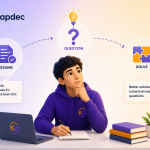
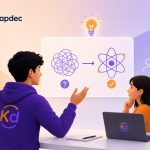
A major reason behind Why Future STEM Professionals Need Communication Skills as Much as Technical Skills is the ability to explain difficult concepts in simple, understandable language.
Knowing a concept is different from communicating it effectively.
Successful STEM professionals regularly explain:
- scientific discoveries
- engineering solutions
- mathematical models
- research findings
- technical recommendations
to audiences with varying levels of expertise.
Whether speaking with teachers, classmates, investors, clients, or policymakers, clear communication ensures that valuable ideas create meaningful impact.
Students who practice simplifying complex topics strengthen both their understanding and their confidence [1].
How Teamwork Drives Modern STEM Innovation
Many of today’s greatest innovations are created through collaboration.
Large scientific discoveries, engineering projects, medical breakthroughs, and software platforms often involve professionals from multiple disciplines working together.
Strong communication supports teamwork by helping students:
- share ideas openly
- ask thoughtful questions
- resolve disagreements respectfully
- coordinate responsibilities
- provide constructive feedback
Organizations such as the Kapdec and the National Academies of Sciences, Engineering, and Medicine consistently emphasize collaboration as a core skill for modern STEM professionals.
Students who communicate effectively become stronger contributors in both academic projects and future workplaces.
Why Communication Builds Leadership
Leadership is not determined solely by technical ability.
Future STEM leaders inspire others by communicating vision, solving problems collaboratively, and guiding teams toward shared goals.
Effective leaders know how to:
- explain objectives clearly
- listen actively
- encourage participation
- make informed decisions
- build trust
Students who strengthen communication skills early often become more confident when leading group projects, research teams, and innovation initiatives.
Leadership begins with the ability to connect ideas with people.
Why Presenting Research Is a Critical STEM Skill
Research has little impact if it cannot be communicated effectively.
Students who conduct experiments, build engineering prototypes, or analyze data must also learn how to present their findings.
Strong research presentations involve:
- organizing information logically
- explaining methods clearly
- interpreting results accurately
- answering audience questions confidently
- highlighting practical significance
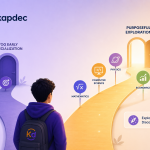
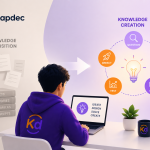
Whether presenting at science fairs, academic competitions, or conferences, communication transforms technical work into knowledge that others can understand and apply.
How Communication Builds Academic Confidence
Many students hesitate to speak because they fear making mistakes.
However, confidence develops through consistent practice rather than perfection.
Students can strengthen communication by:
- participating in classroom discussions
- presenting projects
- teaching concepts to classmates
- joining debate or public speaking activities
- practicing technical explanations regularly
Each opportunity to communicate helps students become more comfortable expressing their ideas.
Over time, this confidence supports stronger academic performance and professional readiness.
How Mentorship Develops Strong Communicators
Communication is a skill that improves with guidance and feedback.
Experienced mentors help students:
- organize their thoughts
- present ideas clearly
- improve public speaking
- communicate professionally
- develop active listening skills
Rather than focusing only on technical accuracy, mentors encourage students to explain concepts in ways that others can easily understand.
This balanced development prepares students for both academic success and leadership opportunities.
How Kapdec Helps Students Build Communication Alongside Technical Excellence
Kapdec believes that exceptional STEM education extends beyond technical mastery.
Its mentorship-driven approach helps students develop:
- clear scientific communication
- collaborative learning skills
- presentation confidence
- critical thinking
- leadership abilities
Students are encouraged not only to solve complex problems but also to communicate their reasoning with clarity and confidence.
Why Communication Is Becoming a Competitive STEM Advantage
As technology advances, technical knowledge alone becomes easier to access through digital resources and AI tools.
The ability to communicate ideas effectively remains uniquely human and increasingly valuable.
Future STEM professionals who can:
- explain technical concepts clearly
- collaborate across disciplines
- present research confidently
- lead diverse teams
- inspire innovation
will be better prepared to create meaningful impact throughout their careers.
Technical expertise opens opportunities.
Communication allows those opportunities to grow.
FAQ’s
Why are communication skills important for STEM professionals?
Communication skills are essential because STEM professionals rarely work alone. Scientists, engineers, programmers, and researchers must explain ideas, collaborate with teams, and present their findings to colleagues, clients, or decision-makers. Strong communication ensures that technical knowledge can be understood, applied, and transformed into real-world solutions.
How does communication improve teamwork in STEM fields?
Most STEM projects involve collaboration between people from different backgrounds and areas of expertise. Clear communication helps team members share ideas, coordinate tasks, resolve misunderstandings, and work toward common goals. Students who develop these skills early are better prepared for collaborative research, engineering projects, and multidisciplinary workplaces.
Why is presenting research an important skill for students?
Conducting research is only one part of the process—students must also be able to explain what they discovered and why it matters. Strong presentation skills help students organize their findings, communicate complex ideas clearly, answer questions confidently, and demonstrate the significance of their work. These abilities are valuable in science fairs, academic conferences, college applications, and future careers.
Can good communication help students become better leaders?
Yes. Leadership in STEM is not based solely on technical expertise but also on the ability to inspire, guide, and collaborate with others. Students who communicate clearly can explain goals, motivate teammates, encourage discussion, and make informed decisions. These qualities help them lead group projects successfully and prepare them for future leadership roles in research and industry.
How can students improve their communication skills while studying STEM?
Students can strengthen their communication skills by participating in classroom discussions, presenting projects, explaining concepts to classmates, joining debate or public speaking activities, and seeking constructive feedback from teachers or mentors. Regular practice helps build confidence and makes it easier to communicate complex technical ideas in a simple and engaging way.
How does mentorship help students develop stronger communication skills?
Mentors provide personalized guidance on how to organize ideas, present information effectively, and communicate with confidence. They encourage students to ask thoughtful questions, explain their reasoning, and adapt their communication style for different audiences. Over time, mentorship helps students become not only technically skilled but also confident communicators who are well-prepared for academic success and future STEM careers.
Final Thoughts
Why Future STEM Professionals Need Communication Skills as Much as Technical Skills reflects the changing demands of modern science and technology.
The most successful STEM professionals do more than solve equations, write code, or conduct experiments. They communicate ideas clearly, collaborate effectively, lead teams, and present complex information in ways that inspire understanding and action.
By developing communication skills alongside technical expertise, students prepare themselves for leadership roles in higher education, research, engineering, healthcare, technology, and countless other STEM fields.
With mentorship and structured opportunities provided by Kapdec, students can build the confidence to express their ideas as effectively as they develop them.
In the future of STEM, success will belong not only to those who know the most—but also to those who can communicate their knowledge with clarity, confidence, and purpose.