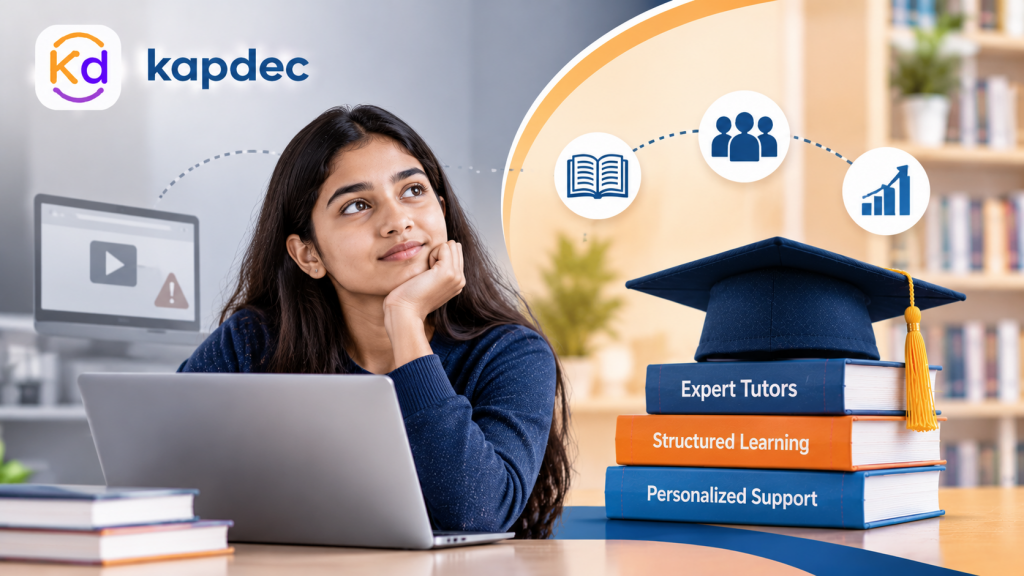
Discover how the online education learning resource gap affects students and how Kapdec helps bridge it through expert tutors, academic resources, personalized learning, and technology.
Why Access to Online Education Isn’t Enough: Bridging the Learning Resource Gap with Kapdec
Online Education Learning Resource Gap is a growing challenge in modern education. Students today have access to online classes, digital platforms, educational videos, and countless learning materials. However, having access to the internet does not necessarily mean having access to the right academic resources, personalized guidance, or structured learning support.
Many students still struggle to find reliable subject-specific materials, experienced tutors, examination preparation resources, and solutions to their individual learning difficulties. This creates a gap between simply accessing online education and actually achieving academic progress.
Kapdec aims to address this challenge by bringing tutors, students, academic resources, and learning management tools together in one organized educational ecosystem.
1. Why Access to Online Education Isn’t Enough
Online education has made learning more accessible, but access alone cannot guarantee quality education. Students may attend virtual classes and watch educational videos but still struggle to understand difficult concepts or apply what they have learned.
For example, a high school student studying AP Physics may have access to hundreds of online videos but may not find a qualified tutor who can explain complex numerical problems. Similarly, a student preparing for the SAT may need structured practice questions, performance assessments, and personalized guidance rather than general educational content.
The challenge is not simply finding information. It is finding relevant, reliable, and appropriately structured resources that support individual learning goals.
2. Understanding the Learning Resource Gap
The learning resource gap exists when students have access to educational technology but lack the resources needed to make meaningful academic progress.
Some common challenges include:
- Limited subject-specific resources: Students may struggle to find quality materials for advanced subjects such as AP Calculus, Physics, Chemistry, and Computer Science.
- Lack of qualified tutors: Experienced tutors may not be available in every geographical location, particularly for specialized subjects.
- Insufficient personalized guidance: General online lessons may not address individual learning difficulties or academic weaknesses.
- Inconsistent practice opportunities: Students need regular assessments, practice questions, and feedback to strengthen their understanding.
- Difficulty tracking progress: Without structured monitoring, students and parents may struggle to understand whether learning efforts are producing improvements.
3. Why Students Need More Than Digital Learning Platforms
A digital learning platform should do more than provide access to recorded lessons and online classrooms. It should help students move from understanding concepts to applying knowledge independently.
For effective learning, students need a combination of:
Quality academic content: Structured study materials, subject resources, practice questions, and curriculum-aligned learning support.
Expert tutor guidance: Access to experienced educators who can explain complex topics and address individual doubts.
Personalized learning: Instruction that considers the student’s current understanding, academic goals, and areas requiring improvement.
Regular assessments: Weekly tests, practice examinations, and feedback that help students identify weaknesses.
Progress monitoring: A clear understanding of attendance, performance, learning consistency, and areas that need additional attention.
The OECD also highlights that digital learning depends on more than device availability. Infrastructure quality, accessibility, and students’ ability to use digital resources effectively matter [1].
4. How Kapdec Helps Bridge the Online Education Learning Resource Gap
Kapdec focuses on connecting students with academic resources, qualified tutors, and organized learning experiences.
Its educational ecosystem includes several areas designed to support different learning requirements.
Access to diverse academic resources: Kapdec supports learning across subjects and academic categories, including SAT Suite, ACT Deck, AP Vault, Mind Matters, Zen Zone, Tutor’s Lab, and High School Hackbook. These resources help students explore academic content and relevant learning support.
Specialized tutor access: Students can connect with tutors offering support across school subjects, STEM disciplines, standardized examinations, and different academic curricula. This helps address the difficulty of finding specialized academic guidance locally.
Structured scheduling and enrollment: Scheduling and enrollment automation help organize tutoring sessions and reduce administrative delays. Session reminders also help students and tutors maintain consistency.
Student performance management: Performance monitoring helps tutors identify learning gaps and understand where students may require additional attention.
Automated time tracking: Tutors can manage session time more effectively and maintain clearer records of instructional activity.
Together, these capabilities help make online learning more organized, accessible, and focused on academic progress.
5. Why Personalized Learning Resources Matter for Academic Success
Every student learns differently. Some understand concepts quickly through visual explanations, while others need repeated practice, individual attention, or step-by-step guidance.
A student struggling with Algebra may need additional problem-solving exercises, whereas an AP Biology student may require detailed explanations of complex scientific concepts. SAT and ACT students may need timed practice and examination strategies.
Personalized learning helps tutors identify these differences and adjust their teaching approaches accordingly.
Instead of expecting every student to follow the same learning path, a structured educational environment can provide resources and guidance according to individual academic requirements.
This makes the learning experience more relevant and helps students use their study time effectively.
6. Building a More Complete Online Learning Experience
The future of online education should not be measured only by the number of students attending virtual classes or the amount of content available online.
It should also be measured by how effectively students can access qualified educators, find relevant learning resources, receive personalized support, and monitor their academic progress.
Kapdec aims to bring these elements together by combining tutoring support, academic resources, and learning management features within one platform.
For students and families, this creates an opportunity to move beyond simply accessing online education and focus on building a more structured learning journey.
FAQ’s
What is the online education learning resource gap?
The online education learning resource gap refers to the difference between having access to online classes and having access to the resources required for effective learning. A student may have a laptop and a stable internet connection but still lack qualified tutors, structured study materials, practice exercises, personalized guidance, and regular feedback. These missing resources can make it difficult for students to understand concepts and achieve their academic goals.
Why is access to online classes alone not enough for effective learning?
Online classes provide a way for students to attend lessons, but effective learning requires much more than simply joining a virtual classroom. Students also need relevant learning materials, opportunities to practice, doubt-clearing support, regular assessments, and feedback on their performance. Without these elements, students may attend classes without fully understanding the subject or identifying areas where they need improvement.
How does the digital divide affect students in online education?
The digital divide affects students who have unequal access to technology, reliable internet, suitable devices, and quality educational resources. Even when students can attend online classes, they may not have access to the same academic support or learning opportunities as others. This creates differences in learning experiences and outcomes. Bridging this divide requires making quality educational content, expert guidance, and structured academic support more accessible.
How can personalized tutoring help bridge the online education learning resource gap?
Personalized tutoring helps address individual learning needs instead of following the same approach for every student. A tutor can identify areas where a student is struggling, explain difficult concepts at an appropriate pace, recommend additional practice, and monitor progress over time. For example, a student struggling with Algebra may need step-by-step explanations and targeted exercises, while an AP Biology student may require subject-specific guidance and exam preparation. This makes online learning more focused and effective.
How does Kapdec help students access better online learning resources?
Kapdec aims to support students through access to tutors, academic resources, and technology-enabled learning features. Its resources include SAT Suite, ACT Deck, AP Vault, Mind Matters, Zen Zone, Tutor’s Lab, and High School Hackbook. Students can also benefit from tutor-student coordination, scheduling and enrollment automation, session reminders, automated time tracking, and student performance management. These resources help create a more organized learning experience beyond simply attending online classes.
What should parents look for when choosing an online education platform?
Parents should look beyond the number of live classes or the availability of recorded lessons. They should evaluate whether the platform provides qualified tutors, structured learning materials, personalized academic support, regular assessments, doubt resolution, and progress tracking. It is also important to check whether students can access relevant resources for their grade level and academic goals. A good online education platform should combine technology, teaching expertise, and continuous academic support to help students make meaningful progress.
Final Thoughts
Access to online education is an important first step, but it is not the complete solution to students’ academic challenges. Without quality resources, experienced tutors, personalized guidance, and consistent performance monitoring, students may continue to face learning gaps despite having access to digital platforms.
Kapdec aims to bridge this gap by connecting students with the academic support and learning resources they need. The goal is not simply to make education available online, but to make the online learning experience more meaningful, organized, and effective.