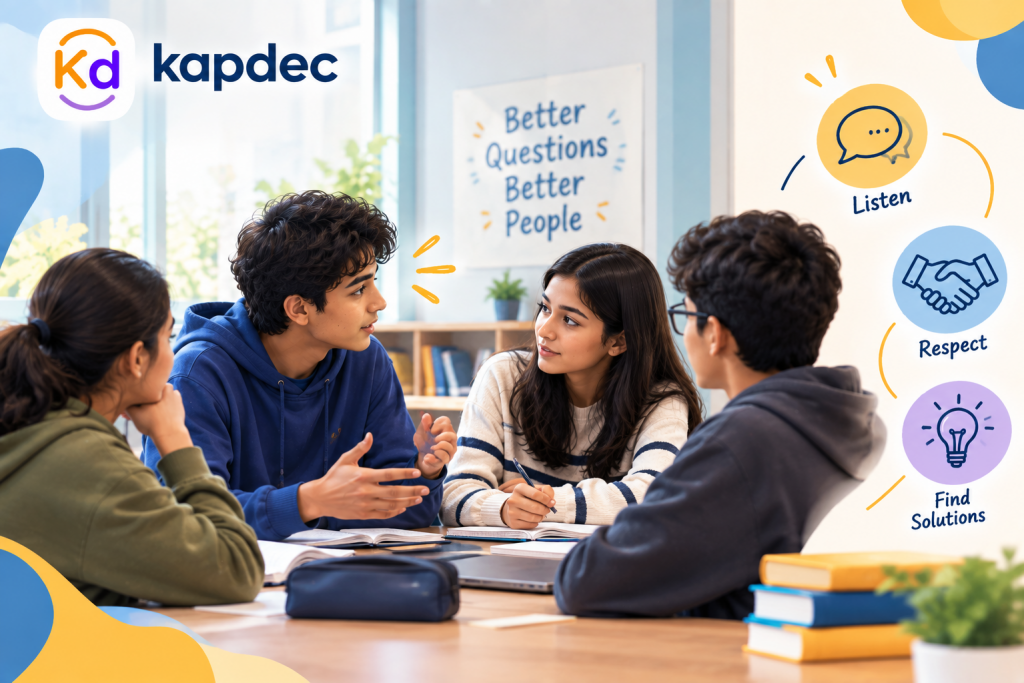
Discover why the End of a School Lesson matters for student understanding, reflection, unanswered questions, and meaningful transitions between topics.
Why the End of a School Lesson Matters as Much as the Beginning
The End of a School Lesson is often treated as a countdown to the bell. Students pack their bags, teachers rush through the final explanation, and everyone prepares to move on to the next subject. Yet these last few minutes can be just as important as the opening of a lesson.
The beginning introduces ideas and creates curiosity. The middle develops understanding through explanations, discussion, and practice. The ending gives students an opportunity to organize what they have learned, recognize what remains unclear, and prepare for what comes next.
Without this final step, a lesson may end on the timetable without feeling complete in the minds of students.
Why the End of a School Lesson Matters for Learning
Understanding a concept during a teacher’s explanation does not always mean a student can recall or apply it independently. Students need opportunities to retrieve information, connect ideas, and express their understanding in their own words.
A short closing activity can help make this process visible.
For example, after a mathematics lesson on quadratic equations, a teacher could ask students to write down one method they learned, explain when they would use it, and identify one step they still find confusing.
This simple exercise encourages students to move beyond copying notes. They must actively think about the concept and decide what it means to them.
The goal is not to repeat the entire lesson. It is to help students identify the most important learning before leaving the classroom.
How Short Reflections Help Students Consolidate Learning
Reflection gives students a moment to pause and consider how their understanding has developed.
Teachers can introduce simple prompts such as:
- What is the most important idea you learned today?
- Can you explain today’s concept in your own words?
- What connection can you make between this lesson and something you already know?
- What question would you like answered in the next class?
These questions do not require lengthy written responses. Even two or three sentences can reveal whether students understand the central idea or are simply remembering isolated facts.
Harvard Graduate School of Education’s Project Zero offers thinking routines that help students reflect on how their ideas change and make their thinking visible. One useful example is “I Used to Think… Now I Think…”, which encourages learners to recognize how their understanding has developed.
When reflection becomes a regular classroom habit, students gradually learn to monitor their own progress instead of relying entirely on teachers to tell them whether they understand.
Why Unanswered Questions Should Be Part of Every Lesson’s Ending
A lesson does not have to resolve every question to be successful.
Sometimes, the most valuable outcome is discovering what remains confusing.
Students may hesitate to raise doubts during a busy lesson because they fear slowing down the class, asking an obvious question, or revealing that they have not understood something. A brief closing activity provides another opportunity to express those concerns.
Teachers can ask students to complete two statements:
- One thing I understand better now is…
- One thing I still want to understand is…
The responses can reveal patterns that are difficult to notice during ordinary classroom discussion. If several students struggle with the same concept, the teacher can revisit it in the next session. If only a few students need support, targeted explanations or additional practice may be more appropriate.
This makes the final minutes a useful opportunity for feedback rather than simply a way to finish the timetable.
How Teachers Can Understand What Students Have Actually Learned
Teachers naturally use classroom participation, homework, quizzes, and examinations to evaluate learning. However, these methods do not always provide immediate insight into what students understood during a particular lesson.
A short exit ticket can help fill that gap.
An exit ticket is a quick task students complete before leaving class. Depending on the subject, it might ask them to solve one problem, explain a scientific process, summarize a historical argument, or identify the main idea of a text.
The important point is to ask students to demonstrate understanding rather than merely confirm that they were present.
For instance, after a science lesson on electricity, students might explain the difference between a series and a parallel circuit. Their answers can show whether they understand the relationship between circuit structure and current flow.
Teachers can then use this information to decide whether the next lesson should introduce a new concept, begin with revision, or address a common misconception [1].
Making the Transition Between Lessons More Meaningful
Learning rarely happens as a collection of completely separate classroom periods. New concepts often depend on ideas students encountered earlier, and students benefit when teachers make those connections explicit.
The final minutes of a lesson can prepare students for that continuity.
A teacher might end a geometry lesson by asking how the properties discussed today will help students understand proofs in the next class. In literature, students might identify a question about a character that the next lesson will explore.
This creates a mental bridge between lessons. Students leave with a clearer sense of what they have learned and why the next topic matters.
A thoughtful ending can also reduce confusion when students return after a break, particularly when a subject involves several connected steps or complex ideas.
How Kapdec Supports More Meaningful Learning
At Kapdec, meaningful learning involves more than delivering explanations or completing a syllabus. Students benefit when they have opportunities to reflect, ask questions, identify gaps, and build connections between concepts.
Short reviews, guided questions, and structured feedback can help learners become more aware of their progress. These practices also give educators useful information for adapting instruction to students’ needs.
You can also explore “Why Schools Need More Spaces Where Students Can Think Without Being Graded” and “Why the Best Classrooms Make Room for Questions Nobody Can Answer Immediately” to learn more about creating environments that encourage independent thought and curiosity.
FAQ’s
Why is the end of a school lesson important for students?
The end of a school lesson gives students an opportunity to review important ideas, organize what they have learned, and identify areas they still find confusing. Instead of leaving the classroom immediately after an explanation, students can use the final few minutes to summarize a concept or answer a short question. This helps them become more aware of their understanding and prepares them to connect the lesson with future learning.
How can teachers help students remember what they learned at the end of a lesson?
Teachers can use short reflection activities, quick quizzes, exit tickets, or one-minute summaries to help students recall important concepts. For example, after a mathematics lesson, students might explain a formula in their own words or solve one problem independently. These activities encourage active recall rather than simply rereading notes. They also help students recognize which ideas they understand and which ones require additional practice.
What is an exit ticket, and how does it improve classroom learning?
An exit ticket is a brief question or task that students complete before leaving the classroom. It may ask them to summarize the main idea, solve a problem, explain a concept, or identify an unanswered question. Exit tickets provide teachers with immediate feedback about students’ understanding. By reviewing the responses, teachers can identify common misconceptions, plan revision activities, and adjust upcoming lessons to better meet students’ learning needs.
How do short reflection activities help teachers identify learning gaps?
Short reflection activities encourage students to express what they understand and where they need help. When students explain a concept in their own words, teachers can often identify misunderstandings that may not appear during ordinary classroom discussions. For instance, several students might complete a mathematics exercise correctly but struggle to explain why a particular method works. Recognizing this gap helps teachers plan more effective explanations and targeted practice.
Why should students be encouraged to share unanswered questions before leaving class?
Encouraging students to share unanswered questions creates a classroom environment where uncertainty is treated as a natural part of learning. Some students may hesitate to ask questions during a lesson because they fear making mistakes or slowing down the class. A closing reflection gives them another opportunity to express their doubts. Teachers can then address common questions in the next lesson or provide individual support where necessary.
How can teachers make the transition between lessons more meaningful?
Teachers can make transitions more meaningful by connecting the current lesson with previously learned concepts and introducing questions that will be explored next. For example, after teaching the basics of electricity, a science teacher might ask students to consider how circuit design affects the functioning of different devices. Such connections help students understand that subjects are not simply separate chapters to memorize. Instead, each lesson contributes to a larger understanding that develops over time.
Final Thoughts
The End of a School Lesson should not be viewed as leftover time after the important teaching is finished. It is an opportunity to turn classroom activity into clearer understanding.
A few minutes of reflection can help students consolidate ideas, communicate unanswered questions, and prepare for future learning. At the same time, teachers gain valuable insight into what students have understood and where additional support may be needed.
The beginning of a lesson opens the door to learning. A thoughtful ending helps students recognize what they have taken through it.