Discover why Straight-A Students Fail to Reach Elite Potential when they focus only on grades instead of strategic learning, specialization, and long-term academic positioning.
Straight-A Students Fail to Reach Elite Potential More Often Than People Realize
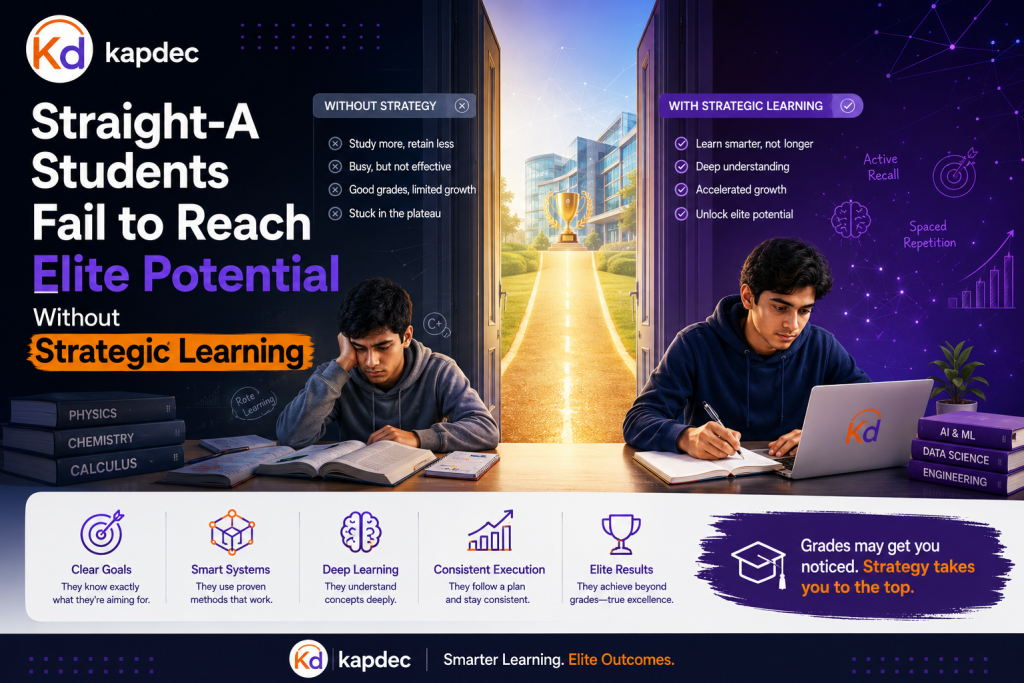
Straight-A Students Fail to Reach Elite Potential because elite academic success today is no longer based on grades alone.
Many students believe that getting all A’s automatically guarantees admission into top universities or elite career opportunities.
But modern admissions and competitive programs work differently.
Elite colleges are not only evaluating performance.
They are evaluating alignment, specialization, and strategic preparation.
This is where many high-scoring students fall behind.
Why Grades Alone Are No Longer Enough
A student may earn straight A’s in multiple subjects and still struggle to stand out for elite programs.
Why?
Because top universities often look for:
- academic alignment
- subject specialization
- intellectual depth
- long-term career direction
- demonstrated capability in relevant fields
For example:
A student applying for competitive computer science programs at institutions like Harvard University, Columbia University, or Massachusetts Institute of Technology may not gain a strong advantage simply through A grades in unrelated subjects like history or literature.
Those grades are valuable.
But they do not demonstrate technical readiness for elite STEM pathways.
That is one reason Straight-A Students Fail to Reach Elite Potential.
The Difference Between Hard Work and Strategic Learning
Many students study hard.
Far fewer study strategically.
Strategic learning means understanding:
- which subjects matter most
- which skills align with future goals
- which academic profile strengthens applications
- how to build depth instead of scattered achievement
According to Kapdec, students perform better when learning is connected to long-term goals and deeper engagement rather than isolated memorization.
This is exactly why Straight-A Students Fail to Reach Elite Potential when they focus only on grades instead of strategic direction.
Why Elite Colleges Value Focused Excellence
Top universities increasingly look for students with clear academic identity.
For example:
A strong computer science applicant may demonstrate:
- advanced mathematics ability
- coding projects
- analytical thinking
- STEM competition performance
- strong SAT Math scores
- relevant extracurricular work
A student with random academic excellence but no clear specialization may appear less competitive.
Elite institutions value focused capability more than generalized perfection.
This is a critical reason why Straight-A Students Fail to Reach Elite Potential [1].
The Role of Mentorship in Strategic Academic Positioning
Most students are never taught how to position themselves academically.
They are simply told:
“Get good grades.”
But strategic mentorship changes everything.
Mentors help students:
- identify long-term academic goals
- prioritize high-impact subjects
- choose meaningful extracurriculars
- develop specialized skills
- avoid wasting time on low-value academic efforts
Platforms like Kapdec support strong academic learning, but mentorship adds strategic direction and long-term planning.
You can also explore our internal guide on Top 1% Students Study Smarter to understand how elite students optimize their learning systems.
This strategic guidance is often what separates average achievers from elite performers.
Why Modern Education Rewards Depth Over Memorization
Traditional education rewarded memorization and broad academic consistency.
Modern elite education rewards:
- critical thinking
- specialization
- problem-solving ability
- real-world application
- intellectual curiosity
Students who simply cram information for exams may achieve high grades but still lack strategic academic value.
That is why Straight-A Students Fail to Reach Elite Potential without focused planning.
How Kapdec Supports Strategic Learning
Kapdec promotes a more advanced educational philosophy built around:
- outcome-based learning
- personalized mentorship
- practitioner-led education
- strategic academic growth
Instead of encouraging students to chase grades blindly, Kapdec focuses on:
- meaningful academic positioning
- skill-based growth
- long-term educational outcomes
This helps students build profiles aligned with elite academic and career pathways [2].
Why Strategic Focus Creates Better Long-Term Success
Students who think strategically often:
- achieve stronger college admissions outcomes
- develop more relevant skills
- avoid academic burnout
- gain clearer career direction
Most importantly, they build momentum toward meaningful goals rather than simply collecting grades.
Because in elite education, success is not only about how well students perform.
It is about whether their performance aligns with where they want to go.
FAQ’s
Why do some straight-A students still fail to reach elite potential?
Many straight-A students focus only on scoring high grades without building a strategic academic profile. Elite colleges often look beyond report cards and evaluate subject alignment, specialization, problem-solving ability, and long-term career direction. A student may perform well academically but still lack the focused preparation required for highly competitive programs.
What does strategic learning actually mean?
Strategic learning means studying with a clear long-term goal instead of trying to perform equally in everything. It involves focusing on subjects, skills, projects, and extracurricular activities that align with future academic or career ambitions. For example, a student aiming for computer science should prioritize mathematics, coding, analytical thinking, and technical problem-solving.
Why are grades alone not enough for elite college admissions?
Elite universities want students who demonstrate depth and direction, not just academic consistency. Strong grades matter, but admissions teams also evaluate whether a student has built expertise and interest in a specific field. A student with excellent STEM achievements may appear more competitive for engineering or computer science programs than someone with generalized high grades.
How does mentorship help students build elite potential?
Mentorship helps students make smarter academic decisions early. Mentors guide students on subject selection, skill development, competition preparation, and long-term academic positioning. This prevents students from wasting effort on low-impact activities and helps them focus on opportunities that strengthen their future goals.
Can students still pursue multiple interests while being strategic?
Yes, students can absolutely explore multiple interests. However, strategic learning means maintaining a clear primary direction while supporting it with complementary skills and experiences. Elite students often balance broad curiosity with focused excellence in one key academic or career pathway.
Why is specialization becoming more important in modern education?
Modern education and career systems are becoming increasingly competitive and skill-driven. Universities and employers value students who show strong capability in specific areas rather than average performance across everything. Specialization demonstrates commitment, depth, and readiness for advanced academic or professional challenges.
Final Thoughts
Straight-A Students Fail to Reach Elite Potential when they mistake grades for strategy.
Academic excellence matters.
But elite success requires more than high scores.
It requires:
- direction
- specialization
- mentorship
- strategic learning systems
The students who reach elite outcomes are rarely the ones doing everything equally.
They are usually the ones focusing deeply on the right things.
Because modern education rewards intentional growth—not just perfect report cards.