Most tutors wrestle with the same question every year: What’s the right price for my time? Charge too much, and families may walk away. Charge too little, and you end up working hard without being fairly paid. As 2026 approaches, this pricing dilemma is becoming even more pressing for both new tutors and seasoned educators.
So, how much should you charge for tutoring in 2026?
Across the U.S., tutoring rates typically range from $25 to $150 per hour, but there’s no one-size-fits-all answer. Pricing depends heavily on where you teach, what you teach, the grade level, and your experience. For instance, tutors in major metropolitan areas like New York City or Los Angeles often charge $60 or more per hour, while tutors in lower-cost-of-living regions may price their services closer to $20–$50 per hour. Understanding where you fit within this spectrum is the first step toward setting a rate that’s both competitive and fair.
Here’s the real issue many tutors don’t talk about enough: most are working too hard for too little. Many tutors consistently undercharge, take on more students than they should, and still struggle to grow their income. It’s not a lack of demand—it’s the way services are priced and packaged.
There is a smarter way. By rethinking how you structure your offerings, tutors can move beyond hourly rates and create packages that generate $1,000 or more per student—without burning out. Meanwhile, parents and students are actively searching for dependable academic support. The challenge isn’t finding learners; it’s standing out in a crowded market. And that requires more than just offering a lower hourly rate—it requires a clear value proposition that shows why you are worth choosing.
This creates an opportunity. Understanding how to determine your optimal tutoring rates, which pricing models work best in 2026, and how to build high-value offers that attract and retain clients can transform your tutoring practice. Whether you’re teaching math, languages, or test prep, the strategies outlined here will show you exactly how to price your services for maximum profit while delivering exceptional value.
The global market reached online tutoring$10.11 billion in 2025 and is projected to grow at a CAGR of 15.10% [1],[5] through 2035. This indicates strong demand for quality tutoring services—creating opportunities for tutors who understand how to position their services effectively.
Understanding Tutoring Rates in 2026: A Snapshot
The tutoring market in 2026 offers a broad range of pricing, giving tutors flexibility—but also creating confusion. On average, most tutors charge $25 to $150 per hour, with rates shaped by how lessons are delivered, what subjects are taught, and the level of expertise required.
Online tutoring continues to be the more budget-friendly option, typically ranging from $25 to $60 per hour. In-person tutoring, on the other hand, commands higher rates—usually $40 to $100 per hour—due to travel time, scheduling constraints, and limited access to qualified tutors.
Pricing also rises with subject difficulty and specialization. In 2026, typical hourly rates across the US, might look like this [2]:
- Elementary to high school subjects: $30–$50
- College-level courses: $40–$70
- STEM subjects: $50–$80
- Test preparation (SAT/ACT/GRE): $50–$90
- Language tutoring: $30–$60
The takeaway is simple: tutoring rates aren’t random. They reflect value, expertise, and demand. Understanding where your services fit within this landscape helps you price confidently—and competitively.
Geographic location creates significant price variations. Major cities like New York and Los Angeles see rates peaking at $60 -$150. Suburban areas average $40 -$90 [3], and rural communities typically range from $30 -$70 [3].
Choosing the Right Pricing Model
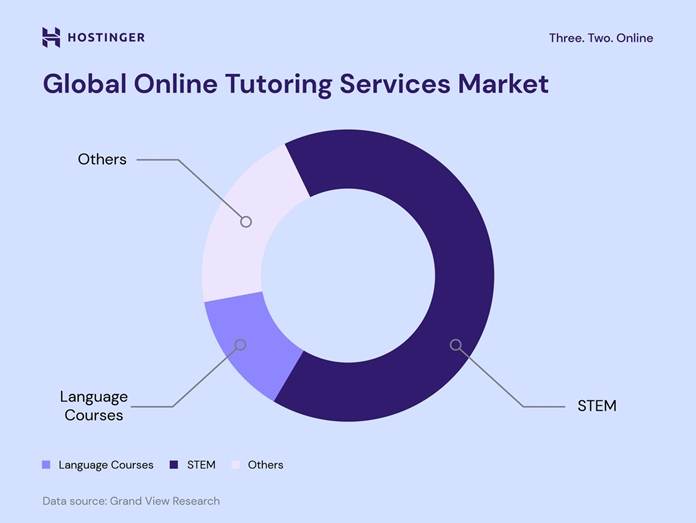
Image Source: Hostinger
The traditional hourly rate model limits your earning potential to the hours you physically work. Today’s successful tutors have moved beyond this approach, exploring pricing structures that increase income while providing greater value to students.
Here are the most effective pricing models for 2026:
- Package Pricing
Bundle sessions to encourage commitment and improve cash flow. For example, offer 5 sessions (or 5 hours) for $200.00 instead of $250. This approach creates predictable income streams while giving students a clear savings incentive.
- Subscription Models
Weekly or monthly packages, such as offering tutoring services for 20 hours or 40 hours each month, as an example, have gained significant popularity. Such packages can be priced attractively to offer consistency in prices and a higher return of students next month, delivering a consistent and predictable income stream for tutors, while offering visible saving to students and parents. Subscriptions provide steady revenue and help students maintain consistent learning momentum.
- Hourly Rates with Strategic Positioning
While hourly pricing remains straightforward, rates vary significantly by delivery method. Online tutoring typically charges between $25 and $50 per hour, but private in-person sessions can command $80 or more [4]. The key is positioning yourself appropriately within these ranges.
- Value-Based Pricing
Focus on outcomes rather than time spent. This model can command 15-25% higher rates because clients pay for results, not hours. Particularly effective for test preparation and specific skill development.
- Sliding Scale Pricing
Adjust rates based on client income to serve diverse communities. This approach makes your services accessible to more students while maintaining your core rate structure.
Consider your expertise, target market, and long-term business goals when selecting the pricing model that best positions your tutoring services for success. The most effective tutors often combine multiple models, using hourly rates for initial consultations and packages for ongoing work.
Building High-Value Tutoring Offers
The most successful tutors don’t simply sell time—they package transformation. Creating high-value tutoring offers can dramatically increase your income while delivering superior results to clients like Kapdec.
Creating Flexible Offers and Packages
The key to earning more without working additional hours lies in strategic bundling. Course bundles increase perceived value, boost sales, and provide students with a more cohesive learning experience. Consider these package structures:
- Small-group pods: Teach 2–4 students together (never more than four). You deliver one high-quality session while earning 2–3× your usual hourly rate, all without expanding your schedule.
- Premium Learning bundles: Go beyond live sessions. Add high-value extras such as progress reports, diagnostic assessments, personalized practice plans, or curated learning materials. These elements position your service as a complete learning solution—not just tutoring time.
- High Impact Study Notes : Provide concise study notes, summary sheets, and exam-focused guides that go beyond the textbook. This saves students hours of reading, boosts retention, and leads to stronger exam results—making your tutoring feel indispensable.
- Transparent Bundles Pricing: Clearly show the value of what students are getting. For example:
Total value: $500 · Bundle price: $397 · You save $103
This kind of clarity builds trust, highlights the deal, and makes the decision to enroll far easier for parents and students alike.
Positioning Yourself for Premium Rates
High-end tutoring services routinely charge $80 to $400+ per hour—not because they work harder, but because they position themselves differently. The same applies to adult learners: when people are looking to build practical, career-relevant skills, they often pay $30 to $75 per hour without hesitation because the value is clear and immediate.
The key to earning premium rates isn’t defending your price—it’s shifting the conversation. Instead of talking about hourly fees, focus on the problem you solve. During consultations, ask thoughtful questions about where the student is stuck, what outcomes they want, and what success would look like for them. Then frame your service as the direct solution to those specific challenges.
Top-tier tutors don’t sell time; they sell transformation. They clearly show how their expertise leads to measurable progress and real results—outcomes that justify the investment. One of the most effective ways to do this is by specializing in high-demand niches, especially skills with immediate, real-world application. When urgency and impact are high, willingness to pay follows naturally.
Final Thoughts
Setting the right tutoring rate isn’t about copying market averages—it’s about understanding what truly drives your value. In 2026, tutoring prices vary widely based on subject expertise, location, delivery method (online vs. in-person), and how services are structured. Tutors who think strategically—and position themselves well—often earn far more than those tied to basic hourly rates.
The most successful tutors have already moved beyond the traditional “pay-per-hour” model. Packages, subscriptions, value-based pricing, personalized coaching to enhance students’ skills, and providing intelligent analysis to students for long-term success, are proving to be smarter ways to increase income while delivering a better experience for students and parents. These models reward results, not just time spent.
At the heart of it all is this truth: your expertise matters. Many tutors unknowingly underprice their services by focusing on hours taught instead of outcomes achieved. When you shift the conversation to student progress, confidence, and measurable improvement, your pricing naturally reflects the real value you provide.
The opportunity has never been bigger. Demand continues to surge—especially in STEM subjects, test prep, and language learning—and the online tutoring market is growing rapidly. Tutors who specialize in high-demand areas and offer well-designed learning solutions are best positioned to thrive.
Ultimately, the right tutoring rate strikes a balance: fair compensation for your skills and accessible education for students. Whether you choose hourly pricing, bundled programs, or subscriptions, your strategy should support your long-term goals and the audience you serve. With the right approach, you can confidently price your services in a way that rewards your expertise and delivers meaningful results—well beyond 2026.
FAQ’s
What factors influence tutoring rates in 2026?
Tutoring rates in 2026 are influenced by factors such as subject complexity, geographic location, delivery method (online or in-person), and the tutor’s expertise. STEM subjects and test preparation generally command higher rates, while rates also vary significantly between urban and rural areas.
How much can I expect to earn as a tutor in 2026?
In 2026, most tutors can expect to earn between $25 and $80 per hour. However, rates can vary widely based on factors like location, subject, and experience. Online tutoring typically ranges from $25 to $90 per hour.
What pricing models are effective for tutoring in 2026?
Effective pricing models in 2026 include hourly rates, package pricing, subscription models, and value-based pricing. Package deals and subscriptions can provide more stable income, while value-based pricing focuses on outcomes rather than time spent, potentially commanding higher rates.
How can I justify charging premium rates for my tutoring services?
To justify premium rates, focus on the transformation and specific results you provide rather than just time spent. Specialize in high-demand subjects, emphasize your unique expertise, and clearly communicate how your services solve specific problems for students. Positioning yourself as an expert in your field can help command rates of $80 to $200+ per hour.
Are there alternatives to one-on-one tutoring that can increase my income?
Yes, alternatives like small-group sessions or “pods” can help increase your income without extending your working hours. However, group tutoring offers a unique challenge, and it is less attractive to high-paying learners because group tutoring requires all students to follow one schedule, eliminates flexibility, and usually, the speed of learning is determined by the slowest learner in the group. Hence, most students do not prefer group learning.
Which tutoring subjects are in the highest demand in 2026?
Demand is strongest in STEM subjects, test preparation (SAT/ACT/GRE), and language learning. Tutors who specialize in these areas and offer structured programs are best positioned to earn premium rates.
References
[1] –https://www.wise.live/blog/average-tutoring-rate-in-the-usa/
[2] –https://clarityflow.com/how-much-should-i-charge-for-tutoring
[3] –https://corp.tutorocean.com/10-proven-ways-to-attract-students-to-your-tutoring-services/
[4] –https://www.mathnasium.com/blog/cost-of-math-tutoring
[5] –https://www.expertmarketresearch.com/reports/online-tutoring-services-market